
Articles

Head in the Sun, Feet in the Shade by Mike Darcy

Head in the Sun, Feet in the Shade
Known as the “Queen of the Vines”, clematis have long been a favorite in many gardens. The name, clematis, is from the Greek word clema which refers to a tendril or vine branch and the correct pronunciation is Klem-ah-tiss but it is often pronounced as kle-MAH-tiss. Regardless of how it is pronounced, I don’t think the plant really cares!
Clematis are often thought of as on old-fashioned flower, and they are. The first hybrid was introduced to gardeners in England in 1862 by an English nurseryman with the name of George Jackman. The name of his plant, Clematis ‘Jackmanii’. In that early time period, many early clematis were named for members of the nursery that was raising them. Actually, that is often still the case today and not just with clematis but many other plants as well. Now, over 150 years since its’ introduction, Clematis ‘Jackmanii’ is still a well-known and a very popular clematis.
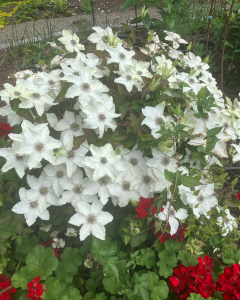
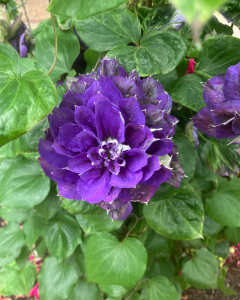
There is a huge diversity within the genus clematis, not only with regard to the color of the flowers, but the shape of the flower, the growth structure of the plant, and the time of flowering, A popular slogan regarding selecting a location for a clematis is “Head in the sun, feet in the shade”. Basically, “the head in the sun” refers to clematis as liking 5-6 hours of sun, and “the feet in the shade” refers to clematis as liking their roots in the shade with a cool damp environment. A garden mulch should be thoroughly worked into the soil at time of planting and then also using the mulch to also cover the soil. Black Gold Natural & Organic Cocoblend Potting Mix would be an excellent material to use because of the moisture retention quality of coir. Often gardeners will plant a ground cover around the roots as well.
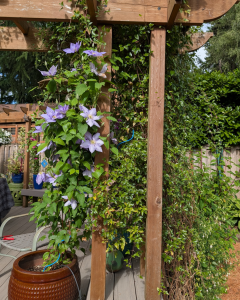
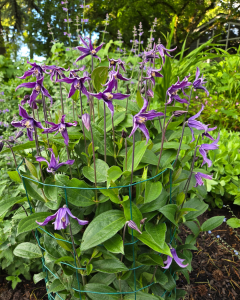
Most clematis are deciduous, and most are climbers and will need some kind of support, which could be a trellis or arbor and often gardeners will plant a clematis at the base of an established shrub. The clematis will then grow into the shrub and perhaps will bloom after a shrub has finished. However, Clematis armandii is an evergreen type and has a very vigorous growth habit. There are also some non-vining types that can be used as a ground cover. Recently there have been some newly developed hybrids that have been bred to be adapted to growing in a container.

About Mike Darcy
Mike lives and gardens in a suburb of Portland, Oregon where he has resided since 1969. He grew in up Tucson, Arizona where he worked at a small retail nursery during his high school and college years. He received his formal education at the University of Arizona where he was awarded a Bachelor of Science Degree in Horticulture, and though he values his formal education, he values his field-experience more. It is hard to beat the ‘hands on’ experience of actually gardening, visiting gardens, and sharing information with other gardeners. Mike has been involved with gardening communications throughout his adult life. In addition to garden writing, he has done television gardening shows in Portland, and for over 30 years he hosted a Saturday radio talk show in Portland. Now he writes, speaks, gardens and continues to share his love of gardening. To be connected to the gardening industry is a bonus in life for Mike. He has found gardeners to be among the friendliest and most caring, generous people. Consequently, many of his friends he has met through gardening


The Best Reblooming Clematis

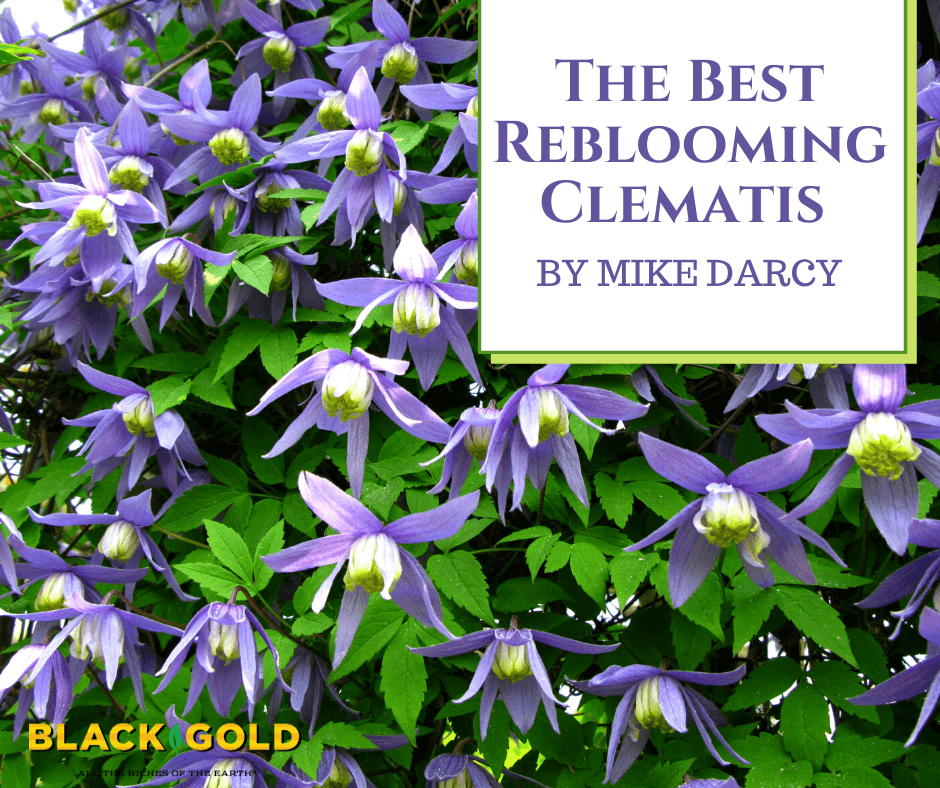
Clematis alpina ‘Pamela Jackman’ first blooms in April and again later in the season.

When visiting older established gardens, if there is a border garden, it will probably contain at least one of these three plants: peony, bearded iris, and clematis. These are often considered old-fashioned plants because they have been regularly planted in gardens for so many years. All three of these plants are generally considered reliable spring bloomers and once blooming. The bloom period can be over several weeks, and there are usually early and late-season varieties, but their flowering time is usually spring and early summer with additional flowers not expected until the next spring. There are, however, exceptions.

Over the past several years, there has been a resurgence of interest to select those that will rebloom. This is especially true with clematis, and with a little effort, a gardener can have plants that will rebloom once and sometimes even twice. I recently discussed reblooming clematis with Linda Beutler, curator of the Rogerson Clematis Collection in Lake Oswego, Oregon, and here are some of her thoughts.

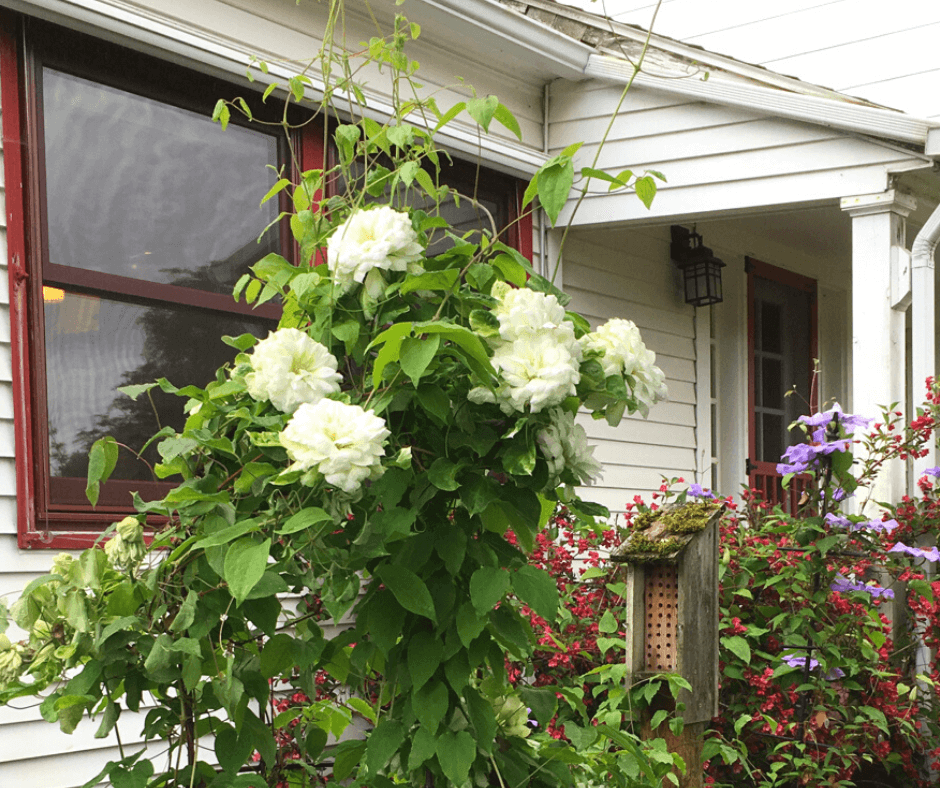
The fully double ‘Duchess of Edinburgh’ blooms as many as three times in a season. (Image from the Friends of Rogerson Clematis Collection archive)

Reblooming Clematis Care

Most clematis grow best in the full to partial sun and like to have their roots shaded and their tops in the sun. After a clematis has flowered, deadhead it, (remove old flowers) and do some light pruning if necessary. Deadheading prevents the plant from setting seed and light pruning removes any dead stems and opens the plant up to more sunlight. Fertilize the plant at this time. Linda said a rose & flower fertilizer is generally good. At the Rogerson Clematis Collection, they use a fertilizer with an NPK, (Nitrogen- Phosphorus-Potassium nutrient numbers on the bag or box) ratio with numbers under 10. Currently, they use a 5-7-2. Often, 30-45 days after fertilization, the plant will re-bloom. For a full list of care tips, visit the Rogerson Clematis Collection page on clematis care (click here).

Five Recommended Reblooming Clematis

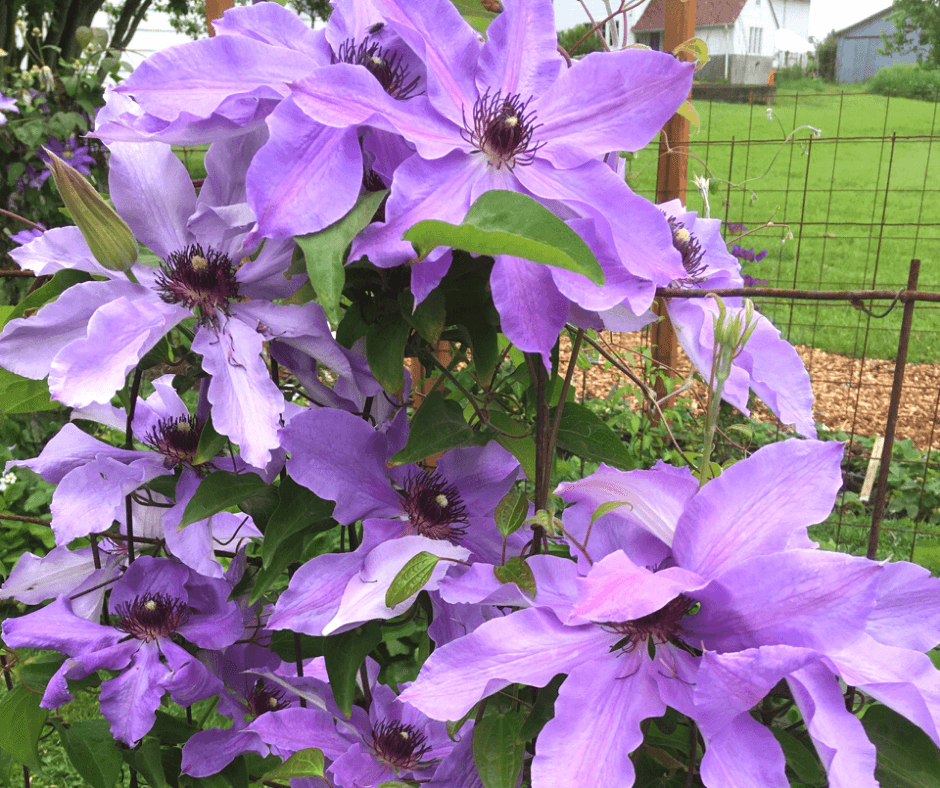
‘Blue Ravine’ is a large-flowered rebloomer. (Image from the Friends of Rogerson Clematis Collection archive)

Naturally, some plants will consistently rebloom easier, and for that consistent rebloom the following are five clematis varieties that Linda recommends.

  1. Clematis alpina ‘Pamela Jackman’ (Zones 3-9) flowers first in April and reblooms well, often in late summer. It requires trellising and can also be grown well in a container. With this clematis, you can have April in August.
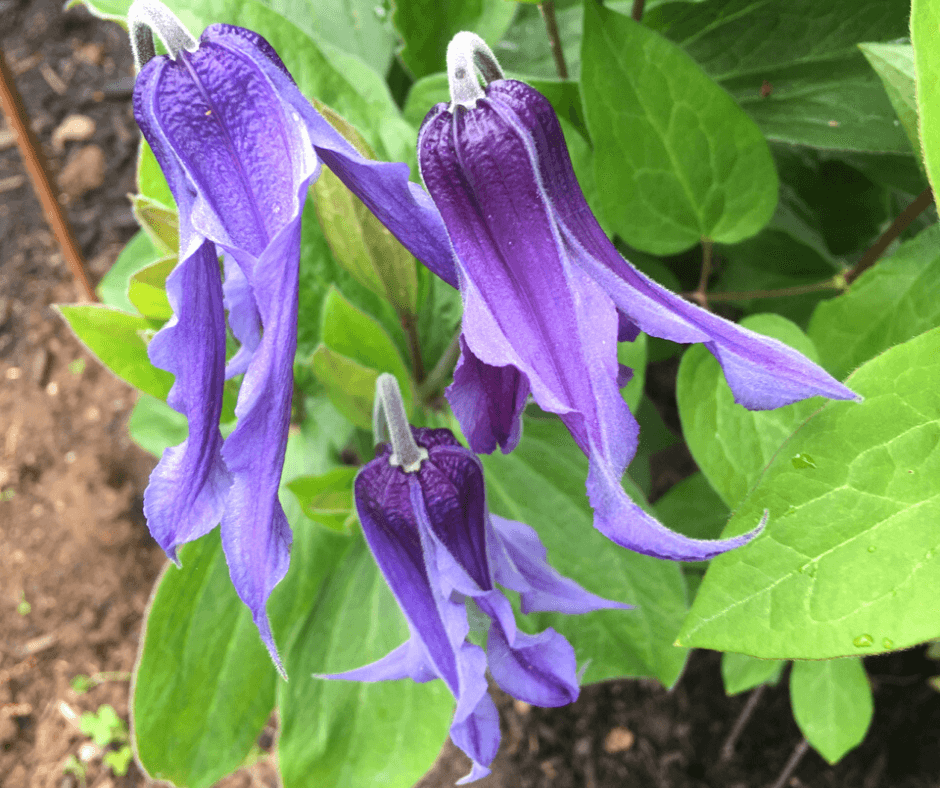
  2. Clematis ‘Elegant Rhythm’ (Zones 5-9) is a handsome herbaceous perennial clematis named and introduced by Joy Creek Nursery. If you do not allow it to set seed, it will rebloom through late spring and summer, just like annual Scabiosa or perennial Astrantia.
  3. Clematis ‘Duchess of Edinburgh’ (Zones 4-9) is a double that can bloom as many as three times in a long growing season. Deadhead the spent blooms and fertilize with most any fertilizer for roses. The fully-double flowering clematis will often produce flowers that are less doubled when they rebloom.
  4. Clematis ‘Blue Ravine’ (Zones 4-9) is an excellent large-flowered variety and has the added advantage of flowering well—if paler—in partial shade. The photo above was taken in September 2020 and looks as though it were in spring.
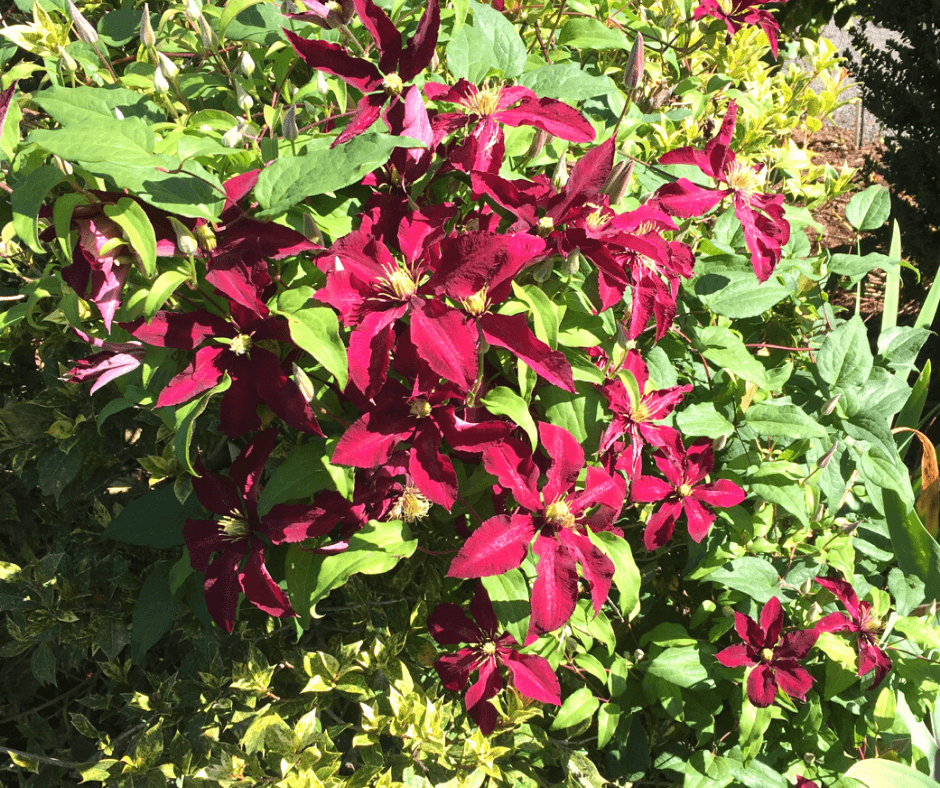
  5. Clematis ‘Niobe’ (Zones 4-9) is a deep-red variety (pictured below reblooming in the autumn). Look closely at the image and you can see this clematis is growing through and is supported by another plant. This particular support plant is Osmanthus heterophyllus ‘Goshiki’.
The deepest-red-flowered ‘Niobe’ is growing up an Osmanthus shrub. (Image from the Friends of Rogerson Clematis Collection archive)

Clematis are often grown in this way using another plant for support. Often some of the old garden roses are used because they not only offer a good support system, but the clematis will flower again when the once-blooming roses are finished.

If you are visiting the Pacific Northwest, and have any interest in clematis, be sure to visit the Rogerson Clematis Garden, which is part of the Lake Oswego, Oregon, Parks & Recreation system. With over 900 taxa represented, it is the most comprehensive collection of clematis within a public garden in North America. Admission is free.

The handsome clematis ‘Elegant Rhythm’ has pendulous flowers. (Image from the Friends of Rogerson Clematis Collection archive)