
Articles

Cannas for Color All Summer by Mike Darcy

Big, bold, bodacious & beautiful, cannas are a superb plant for providing color all summer. Not only will cannas produce flowers but some of their spectacular foliage can make them a colorful plant in the garden even when not in bloom. Cannas are well adapted to growing in a garden bed or in a container. Planted in the ground, cannas can make a very striking mass of color with their large leaves and flowers.  They also make excellent container plants and are ideal for a small space garden or on a deck or patio. 

Cannas have a starch rich rhizome and have been cultivated for hundreds of years. Most of the species available today are from the American tropics and subtropics and in their initial introduction to gardens, they were considered tropical plants. While it is true that they are tropical, they are what I would call a ‘hardy’ tropical that can be successfully grown as a summer plant in most temperate zones in the United States and can be an easy and low maintenance plant.
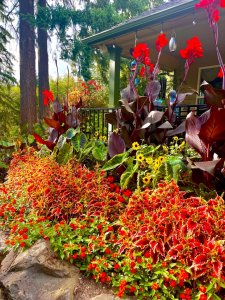
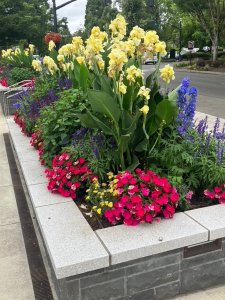
In my own garden, in western Oregon, I like to grow them in containers on our deck. Our deck is in full sun and they thrive and bloom all summer. My soil choice has been either Black Gold Moisture Supreme Container Mix or Black Gold Natural & Organic Potting Mix. For growing cannas in a container, a large pot is best, it is amazing how much a plant can spread in just one season.


There are lots of choices with the diversity of cannas regarding flower color, foliage pattern, and the height of the plant. The tall growing types are idea for the back of a mixed flower bed which when selecting a plant, it is important to consider the space and the desired height.
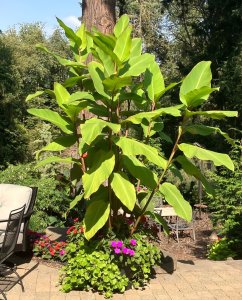
For a fun and novelty canna that probably grows much too tall for most container planting is Canna musifolia, often called the Banana Canna. This is a tall grower and has the common name of Banana Canna for a reason, it grows fast and tall, often 8 feet or more!

As I mentioned, the canna choices are vast and below are couple of my favorites that are growing in my garden this summer. When visiting a garden center, there will be many more than what I mention here.
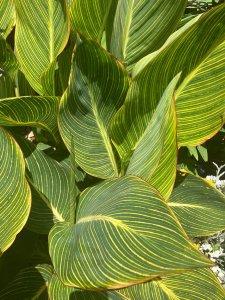
 

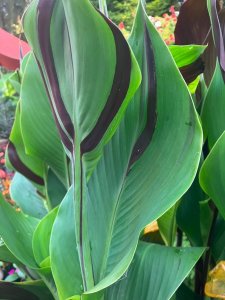
Canna pretoria ‘Bengal Tiger’ is known for the very attractive striped foliage. While this canna has vivid orange flowers, even when not in bloom, the foliage makes this a very colorful and attractive plant. It is a great choice for a pot on a deck or patio.


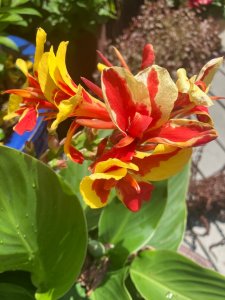
If I was picking a favorite, it would have to be canna ‘Cleopatra’. This canna has both multicolored leaves and flowers. Some leaves will be all green, some will be a dark bronze, and often a leaf will be a mix of the two colors while some will be green with a single stripe of bronze. The flowers are equally diverse in color. They can be all red, all yellow, (sometimes with spots), and a flower can be half red and half yellow. It makes a great conversation plant!
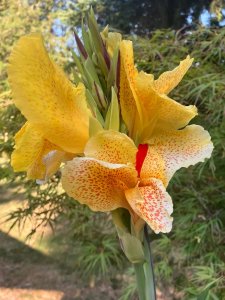
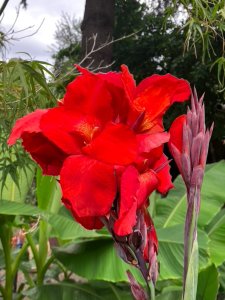
Red Gold Flame was new to me last year and is a lower growing type which makes it idea for a small space. It was never without a flower.
As mentioned earlier, cannas are a tropical plant and may need some winter protection depending on the region they are growing in. In western Oregon, when planted in the ground and with good drainage and a mulch covering, they will often survive a winter. Being in a container, they are more vulnerable to the elements, and it is a good idea to give them winter protection. Once cold weather arrives, I cut the stems back to the soil level and lift plant out of the container and shake off excess soil. Not having a greenhouse or basement, I put the rhizomes in a large plastic container and cover them with peat moss and then store the container in our unheated garage. This has worked for me for many years and in the spring, they are ready to plant.

Most garden centers will have a good selection at this time and the plants will probably be in bloom. If you have never grown cannas, give them a try and I think you will be pleasantly surprised at the color they will provide for the balance of the summer.

 

About Mike Darcy


Mike lives and gardens in a suburb of Portland, Oregon where he has resided since 1969. He grew in up Tucson, Arizona where he worked at a small retail nursery during his high school and college years. He received his formal education at the University of Arizona where he was awarded a Bachelor of Science Degree in Horticulture, and though he values his formal education, he values his field-experience more. It is hard to beat the ‘hands on’ experience of actually gardening, visiting gardens, and sharing information with other gardeners. Mike has been involved with gardening communications throughout his adult life. In addition to garden writing, he has done television gardening shows in Portland, and for over 30 years he hosted a Saturday radio talk show in Portland. Now he writes, speaks, gardens and continues to share his love of gardening. To be connected to the gardening industry is a bonus in life for Mike. He has found gardeners to be among the friendliest and most caring, generous people. Consequently, many of his friends he has met through gardening

Head in the Sun, Feet in the Shade by Mike Darcy

Head in the Sun, Feet in the Shade

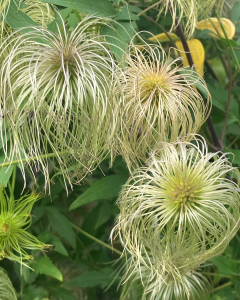
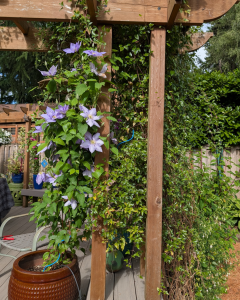
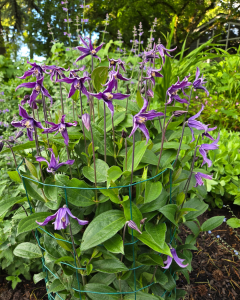
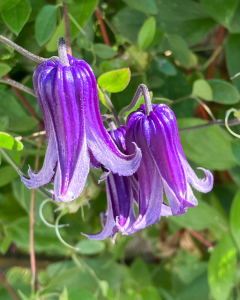
Known as the “Queen of the Vines”, clematis have long been a favorite in many gardens. The name, clematis, is from the Greek word clema which refers to a tendril or vine branch and the correct pronunciation is Klem-ah-tiss but it is often pronounced as kle-MAH-tiss. Regardless of how it is pronounced, I don’t think the plant really cares!

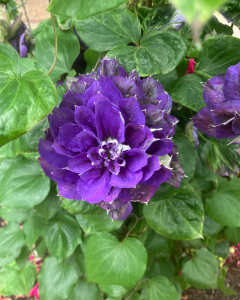
Clematis are often thought of as on old-fashioned flower, and they are. The first hybrid was introduced to gardeners in England in 1862 by an English nurseryman with the name of George Jackman. The name of his plant, Clematis ‘Jackmanii’. In that early time period, many early clematis were named for members of the nursery that was raising them. Actually, that is often still the case today and not just with clematis but many other plants as well. Now, over 150 years since its’ introduction, Clematis ‘Jackmanii’ is still a well-known and a very popular clematis.

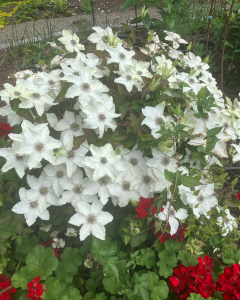
There is a huge diversity within the genus clematis, not only with regard to the color of the flowers, but the shape of the flower, the growth structure of the plant, and the time of flowering, A popular slogan regarding selecting a location for a clematis is “Head in the sun, feet in the shade”. Basically, “the head in the sun” refers to clematis as liking 5-6 hours of sun, and “the feet in the shade” refers to clematis as liking their roots in the shade with a cool damp environment. A garden mulch should be thoroughly worked into the soil at time of planting and then also using the mulch to also cover the soil. Black Gold Natural & Organic Cocoblend Potting Mix would be an excellent material to use because of the moisture retention quality of coir. Often gardeners will plant a ground cover around the roots as well.

Most clematis are deciduous, and most are climbers and will need some kind of support, which could be a trellis or arbor and often gardeners will plant a clematis at the base of an established shrub. The clematis will then grow into the shrub and perhaps will bloom after a shrub has finished. However, Clematis armandii is an evergreen type and has a very vigorous growth habit. There are also some non-vining types that can be used as a ground cover. Recently there have been some newly developed hybrids that have been bred to be adapted to growing in a container.

About Mike Darcy


Mike lives and gardens in a suburb of Portland, Oregon where he has resided since 1969. He grew in up Tucson, Arizona where he worked at a small retail nursery during his high school and college years. He received his formal education at the University of Arizona where he was awarded a Bachelor of Science Degree in Horticulture, and though he values his formal education, he values his field-experience more. It is hard to beat the ‘hands on’ experience of actually gardening, visiting gardens, and sharing information with other gardeners. Mike has been involved with gardening communications throughout his adult life. In addition to garden writing, he has done television gardening shows in Portland, and for over 30 years he hosted a Saturday radio talk show in Portland. Now he writes, speaks, gardens and continues to share his love of gardening. To be connected to the gardening industry is a bonus in life for Mike. He has found gardeners to be among the friendliest and most caring, generous people. Consequently, many of his friends he has met through gardening


Fuchsias, Everbloomers All Summer by Mike Darcy

Fuchsias, Everbloomers All Summer

With the month of May, the garden season is in full swing. Garden centers are bursting at the seams with new shipments of plants and for many gardeners this is the month to purchase plants for the summer garden. Whether for flower color or foliage, there is a vast selection to choose from. Sometimes it is like being on ‘overload’ with the choices we have. Often, for many gardeners it is difficult to limit the amount and selection of plants that we buy and often with defer to the adherence of the phrase that “there is always room for one more”.

One group of plants that stands out for continuous summer flowers is the Fuchsia. In addition to the flowers, there is diversity with the foliage that can provide color as well. There are also different growth habits of fuchsias, with some that are trailing and will make an excellent addition for hanging baskets or plant them in a large pot to trail down the sides. There are many upright varieties that are well suited for planting in the ground and will also provide some upright structure in a container. Be sure to check out a relatively new group called “Hardy Fuchsias” that tend to have a more upright form and are being bred to withstand winter temperatures in many parts of western Oregon and Washington.

Considering their native environment of South and Central America where they are concentrated in cool, moist tropical and subtropical regions, the potting mix they require is very important. Black Gold has several good choices and my preference for containers is Black Gold Natural & Organic Potting Mix. For ‘hardy fuchsias’ that will be planted in the ground, plant them about four to five inches deeper than the soil level in the pot and this will help the plants survive the winter. For fuchsias in the ground, I would suggest Black Gold Natural & Organic Cocoblend Potting Mix. Coir is a material that is extracted from the fibrous outer husk of a coconut, and it has excellent moisture retention.

Fuchsias bloom on new growth and a regular fertilizer routine is recommended for continued flowering. Pick off the old flowers as they fade. With so many choices and diversity, it is difficult to pick a favorite, but the following are four that I have had in my garden for several years and I find them very dependable, continuous bloomers, hummingbird magnets, and generally pest free.


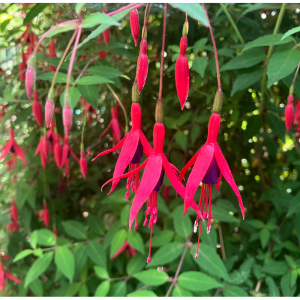
Fuchsia magellanica has been in my garden for more years than any other fuchsia that I have. When we have had some very cold winters, the plant will die to the ground, but new growth reappears the following spring. This past winter was quite mild and there was no die back. Because of that my plant, which is growing against a support structure, is now over 8 feet tall and is covered with drooping small red and violet flowers.
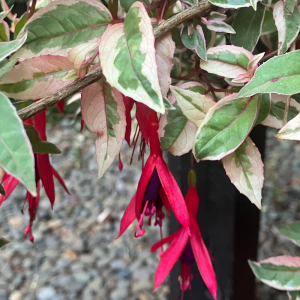
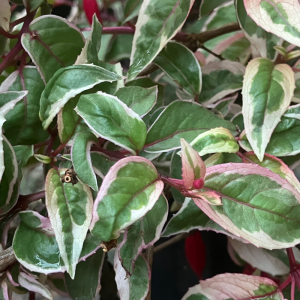
Fuchsia ‘Tom West’ has everything going for it. It has a trailing and mounding habit of growth which makes it excellent for containers. With variegated leaves, it looks good even when not in bloom. Give it some protection from the hot afternoon sun. This fuchsia won the Royal Horticulture Society Award of Garden Merit in 2015. It is very deserving of this award.

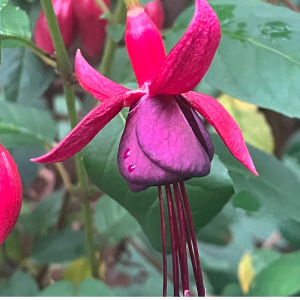
Fuchsia ‘Debron’s Smokey Blues’ is an upright compact shrub with single flowers that have magenta sepals and deep purple corollas. When I saw this outstanding color combination in a garden several years ago, I knew that I needed one. In addition to the outstanding flower color, the foliage tends to be a light blue green.

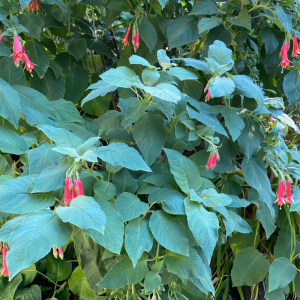
Fuchsia speciosa is a hybrid with parentage from Central America and Mexico. It has some unique characteristics, primarily the long red-orange tube shaped flowers and the heart-shaped leaves that have a velvet-like feel to the touch. This is best in a location with some shade where it will reach about 3 ft in height. This fuchsia dies to the ground in the fall and needs to be heavily mulched for the winter.

I have barely touched on the hundreds of different fuchsias that are available. This is an ideal time to buy them because most will be in bloom, and you can be sure of getting the color you want. There is room for a fuchsia even in gardens with limited space or decks and patios where they can be grown in containers. Not only will they provide color all summer, but they are good pollinator plants and a big hummingbird attractant.

About Mike Darcy


Mike lives and gardens in a suburb of Portland, Oregon where he has resided since 1969. He grew in up Tucson, Arizona where he worked at a small retail nursery during his high school and college years. He received his formal education at the University of Arizona where he was awarded a Bachelor of Science Degree in Horticulture, and though he values his formal education, he values his field-experience more. It is hard to beat the ‘hands on’ experience of actually gardening, visiting gardens, and sharing information with other gardeners. Mike has been involved with gardening communications throughout his adult life. In addition to garden writing, he has done television gardening shows in Portland, and for over 30 years he hosted a Saturday radio talk show in Portland. Now he writes, speaks, gardens and continues to share his love of gardening. To be connected to the gardening industry is a bonus in life for Mike. He has found gardeners to be among the friendliest and most caring, generous people. Consequently, many of his friends he has met through gardening