

Head in the Sun, Feet in the Shade
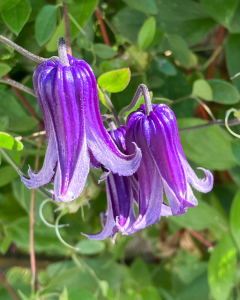
Known as the “Queen of the Vines”, clematis have long been a favorite in many gardens. The name, clematis, is from the Greek word clema which refers to a tendril or vine branch and the correct pronunciation is Klem-ah-tiss but it is often pronounced as kle-MAH-tiss. Regardless of how it is pronounced, I don’t think the plant really cares!
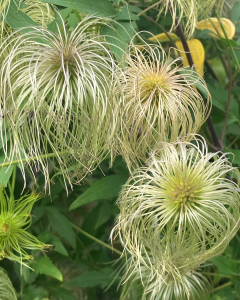
Clematis are often thought of as on old-fashioned flower, and they are. The first hybrid was introduced to gardeners in England in 1862 by an English nurseryman with the name of George Jackman. The name of his plant, Clematis ‘Jackmanii’. In that early time period, many early clematis were named for members of the nursery that was raising them. Actually, that is often still the case today and not just with clematis but many other plants as well. Now, over 150 years since its’ introduction, Clematis ‘Jackmanii’ is still a well-known and a very popular clematis.
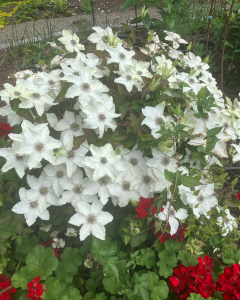
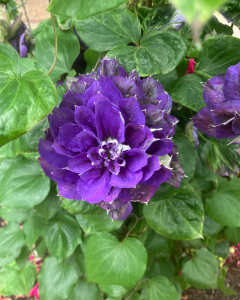
There is a huge diversity within the genus clematis, not only with regard to the color of the flowers, but the shape of the flower, the growth structure of the plant, and the time of flowering, A popular slogan regarding selecting a location for a clematis is “Head in the sun, feet in the shade”. Basically, “the head in the sun” refers to clematis as liking 5-6 hours of sun, and “the feet in the shade” refers to clematis as liking their roots in the shade with a cool damp environment. A garden mulch should be thoroughly worked into the soil at time of planting and then also using the mulch to also cover the soil. Black Gold Natural & Organic Cocoblend Potting Mix would be an excellent material to use because of the moisture retention quality of coir. Often gardeners will plant a ground cover around the roots as well.
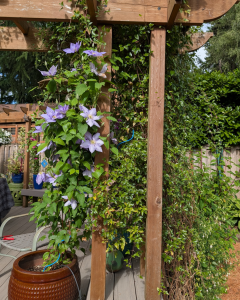
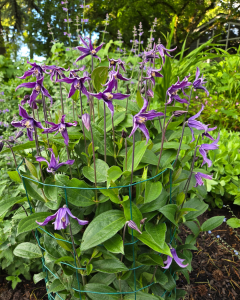
Most clematis are deciduous, and most are climbers and will need some kind of support, which could be a trellis or arbor and often gardeners will plant a clematis at the base of an established shrub. The clematis will then grow into the shrub and perhaps will bloom after a shrub has finished. However, Clematis armandii is an evergreen type and has a very vigorous growth habit. There are also some non-vining types that can be used as a ground cover. Recently there have been some newly developed hybrids that have been bred to be adapted to growing in a container.

About Mike Darcy