
Articles

Rehab Raised Beds Inside and Out

Raised-bed hoops and row covers can help you protect crops from harsh growing conditions and winter cold.

Second gardens are always better than first gardens.  When those first gardens were your raised beds, then maybe it’s time to raise the bar.  Bigger, better, and more prolific are garden characteristics that all gardeners want, so perhaps it’s time to rehab and expand in preparation for next year’s summer garden.

So many raised beds were at first experimental or created with the kids as a family project without long-term planning and smart design.  That’s why they often don’t last as long as they should.  Earth-to-wood contact (something forbidden in house building) introduces wood rot and invites pests, such as termites. You need to know what you are doing to get more life from your raised bed.

Choosing the Best Raised Bed Building Materials
layers
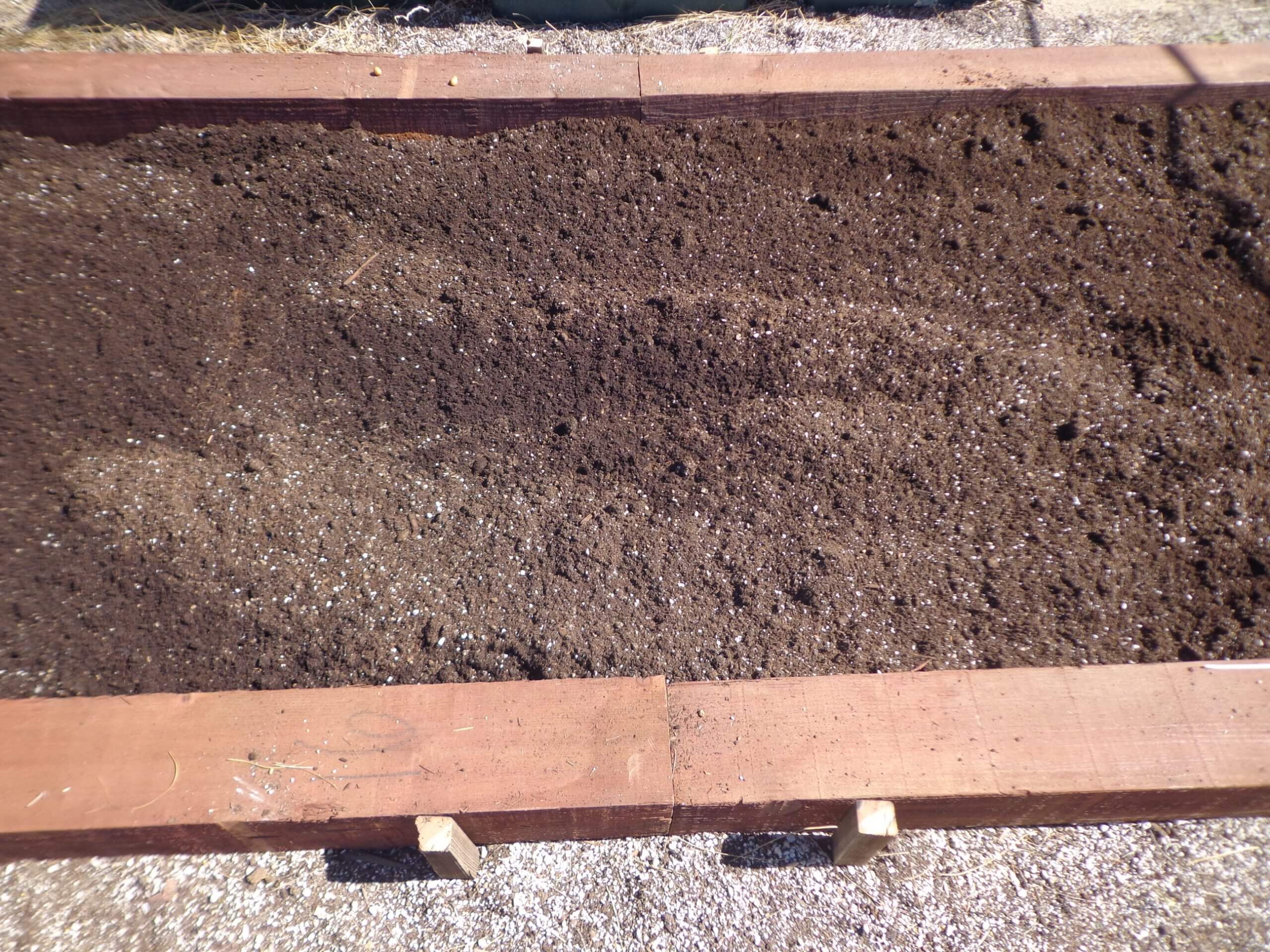
Redwood ties are naturally rot resistant and great for raised bed building.

Early on, wooden railroad tie beds [read more about railroad tie beds] became popular and kept the rot problem at bay, but ties are made from heavily treated wood. They contain dangerous heavy metals and creosote, which can leach into the soil and be taken up by edible plants. Pressure treated wood has the same problem. It is treated with fungicides and other compounds to reduce rot that can leach into the soil.

Untreated woods are not all the same. Many break down fast, resulting in short-lived raised beds. If you want long-lasting beds, avoid soft or rustic reclaimed woods certain to rot quickly. Instead, choose long-lasting red cedar or redwood. Both decompose slowly and are the most recommended for beautiful frames that resist rot. Trex, and other polymer/wood alternatives, also last forever and look great. All of the rot-resistant options are initially more expensive but worth it if you plan to garden for years.

Rehabbing Your Raised Bed
coir
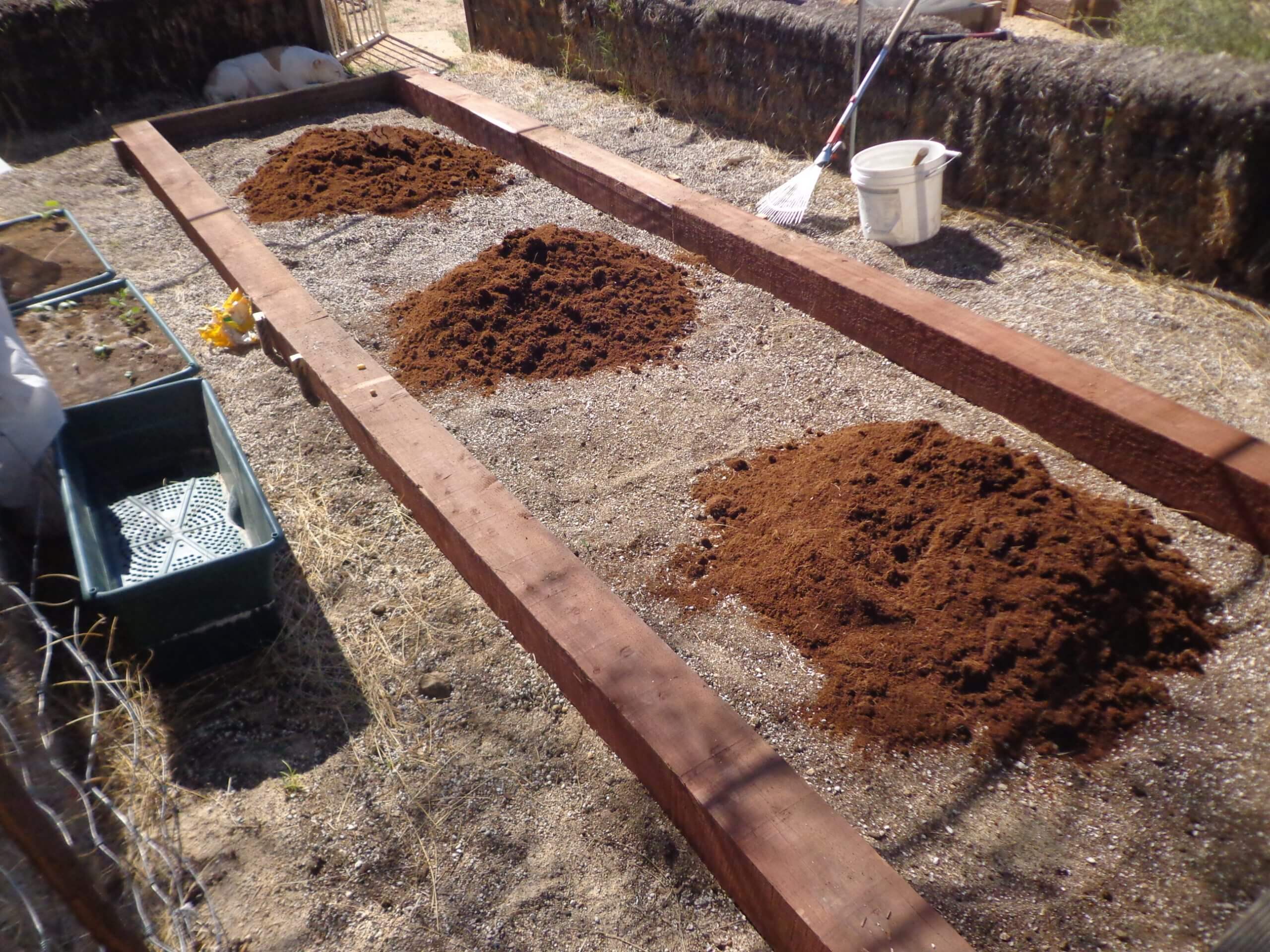
Just Coir creates a good organic base layer for raised bed gardens.

If you already have raised beds made with fast-to-decompose wood, you may already be experiencing the unfortunate and very common results. They are rotting, bowing, or breaking open at the seams due to decomposing edges weakened by the weight of soil, plants, and mulch.  This means it is either time to rebuild or refurbish the frames.

Moreover, if you have had your beds for a while, the soil will be low and in need of replacement. Like all garden beds, soil volume falls as microbes consume the fine humus, and nutrients are depleted by garden plants. Poor garden soil will produce poor garden plants.

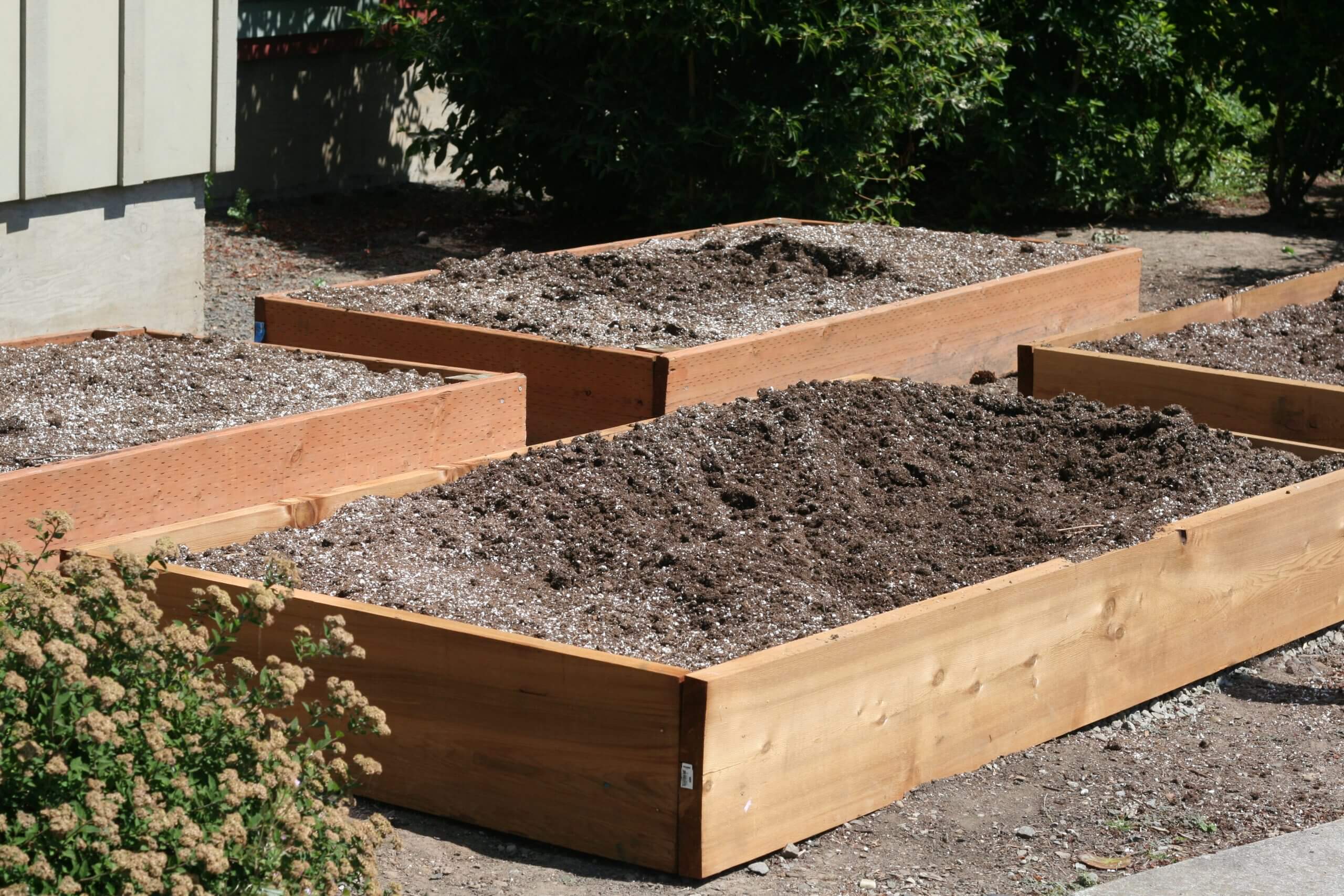
Fall is the best time to replenish raised bed soil and fix repairs. Take advantage of the fabulous fall weather to replace all rotting or bowing boards or edges, and revive sad, tired soil.  Here’s the five-step process in a nutshell:

  1. Remove existing soil, if it’s degraded to mostly woody matter and perlite.  Stockpile the old soil material for future use as summer mulch, or layer it into the compost heap.
  2. Inspect the newly exposed sidewalls by stabbing questionable spots with a screwdriver.  If the metal penetrates the wood,  then there’s rot, and they need to be replaced.  Also, check and reinforce loose corners.
  3. Make repairs to sidewalls using Trex or long-lasting, untreated wood boards. Consider adding more height if you would like to grow plants with deeper root systems. Not only should you use strong, quality wood, but investing in heavy hardware will add to the longevity of your beds. Choose heavy wood screws tightened with an electric screwdriver to keep beds from loosening with the seasonal shrink and swell of the wood.
  4. Replace the soil in stages.  Black Gold Just Coir creates a 100% organic matter barrier that holds water and repels root-knot nematodes.  The heart of the raised bed should contain a rich mix of local topsoil amended with Black Gold Garden Compost Blend and a soilless potting mix, such as Black Gold Natural and Organic Potting Soil. The combination depends on the quality of your local soil; great topsoil requires fewer amendments. In general, an even mix of 2 parts topsoil to 1 part compost and 1 part soilless potting mix will yield great results. If drought is a problem in your area, adding a mulching layer of Black Gold Just Coir or Garden Compost Blend will reduce surface water loss.
  5. Add an all-purpose fertilizer, at the manufacturer’s prescribed application, to help drive explosive growth.

Irrigate and Sow
irrigation
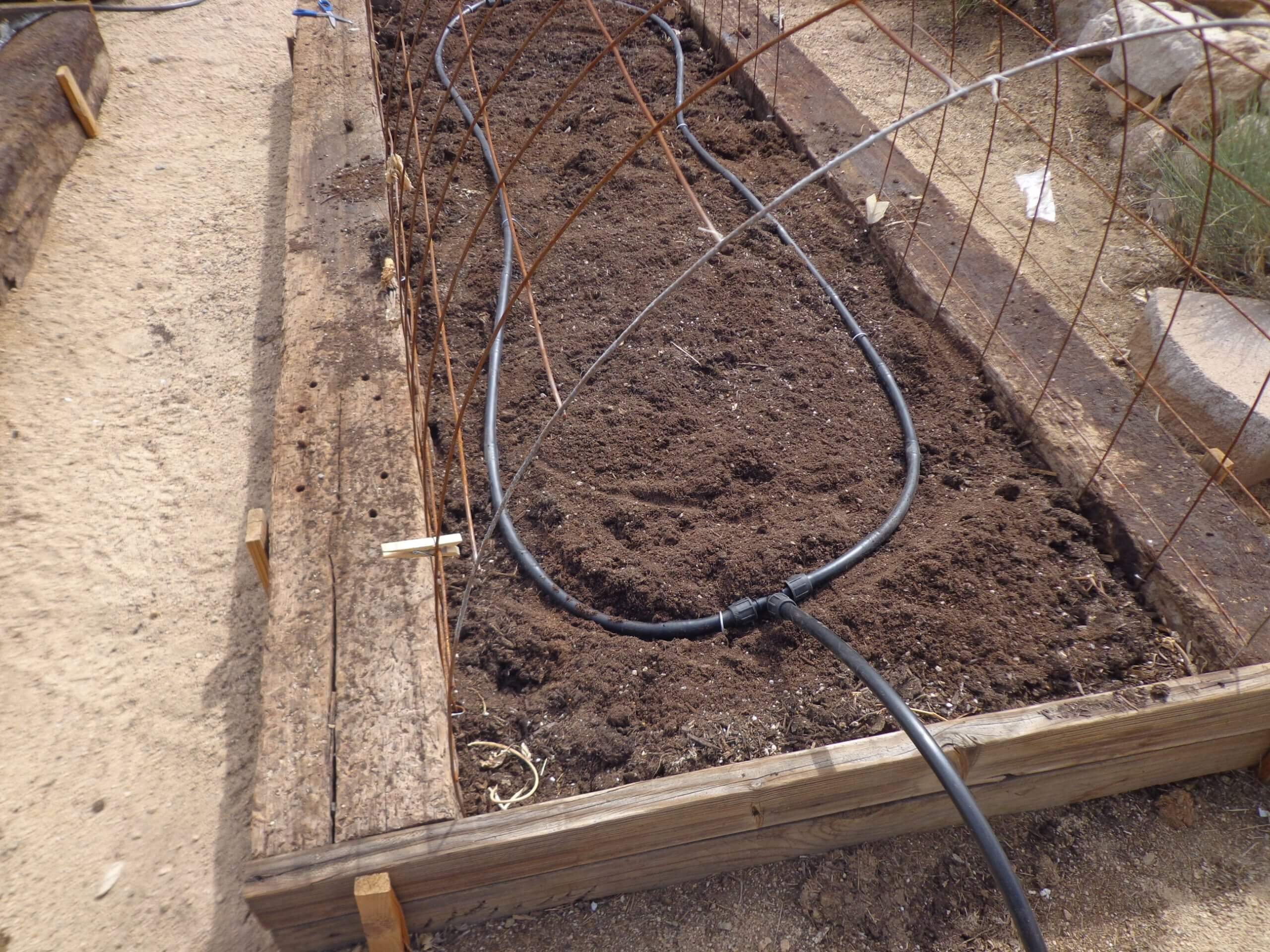
Inline drip tubing that invisibly waters your garden without ugly surface tubes and emitters.

Gently water your raised beds to allow them to settle and marry over the winter months.  If you don’t already have it, drip irrigation is highly recommended for effortless raised bed gardening.  Try soaker hoses or buried underground inline drip tubing that invisibly waters your garden without ugly surface tubes and emitters.  If you want to expand next year, put in a new bed close to the old one and share the irrigation.

While watering your rehabbed raised beds, throw in some seeds for beets, radishes, turnips, and other root crops that germinate at temps down to 40 degrees F.  The addition of row covers will protect cool-season crops well into winter.  Harvest the leaves, eat the sweet roots, and enjoy long winter yields as your refreshed raised beds do all of the work for you.
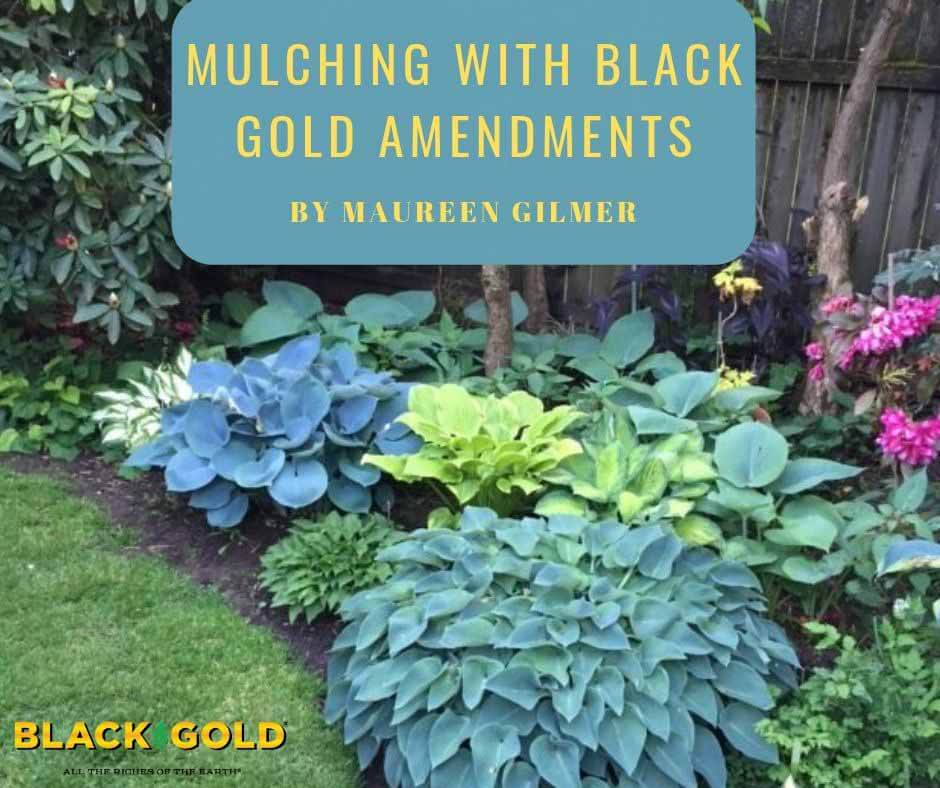
Mulching Gardens With Black Gold Amendments

When the drought is long, soils are poor, and money is short, one way to revitalize struggling garden plants is to protect their roots with mulch. Good mulches help to retain moisture, cool the root zone, and discourage weeds. The conventional wisdom is to mulch with wood chips or ground up bark, but both are very slow to decompose and can bind needed soil nutrients. The better option is to protect small beds and containers with organic-rich amendments that give back.

Garden Mulches for Soil Enrichment

Rich compost, peat moss, coir, or Black Gold Earthworm Castings are all amendments that double as mulches–alone or as home-mixed blends–in small ornamental gardens or vegetable gardens.  All offer needed organic matter, which helps soils better retain water and maintain porosity. They also offer structural and water-holding benefits.  For example, Black Gold Garden Compost Blend contains peat moss for water retention and compost give poor soils better aeration for easier establishment and performance.

Amendment mulching is often most effective in shaded areas because it helps to simulate conditions on the forest floor.  If you take a cross section of this “duff” layer, you’ll see that it’s mostly leaves or needles with a fine, dark layer that sits right on top of the earth.  It’s rich in decomposing organic matter, which is why shade plants are often surface rooted.

Landscape Mulches for Trees and Shrubs

This is also true of acid-loving plants, such as azaleas or camellias, which  develop a wide, shallow root system where the majority of the soil nutrition lies. In fact, without a yearly surface application of organic matter, these plants can suffer. All too often you see the surface roots of azaleas exposed after years without the addition of a mulch layer.  The organic matter is essential to keep their roots moist and cool, especially when drought descends. We recommend mixing a 1:1 of Black Gold Garden Compost Blend and Black Gold Peat Moss for acid lovers. Both products offer needed organic matter and peat moss is a little more acid, which benefits these plants.

Assess your favorite plants, planters, individual trees and shrubs to determine if they will benefit from this special treatment.   Apply a 2- to 3-inch layer of amendment around the base of the plant.  Always keep it few inches clear of the trunk to prevent bark-to- mulch contact, which can induce stress and rot.  Extend the mulch layer out to the edge of the drip line.

Don’t work the amendment in. Just smooth and pat it with your palm to flatten it out for better soil contact.   Moisten often with just a light spray or collected household water to keep these amazing shrubs and trees happy on minimal rainfall.  For areas with brief drought, mulch provides great short-term protection from an abnormally dry or hot summer.

As landscapes everywhere are being altered to be more efficient, don’t forget that amendment mulch can mean so much more to your plants.  If you already have bark mulch in place, the next best thing is to sprinkle amendments over the bark, so they can filter down and provide support the next deep water day or after a welcome summer cloudburst.

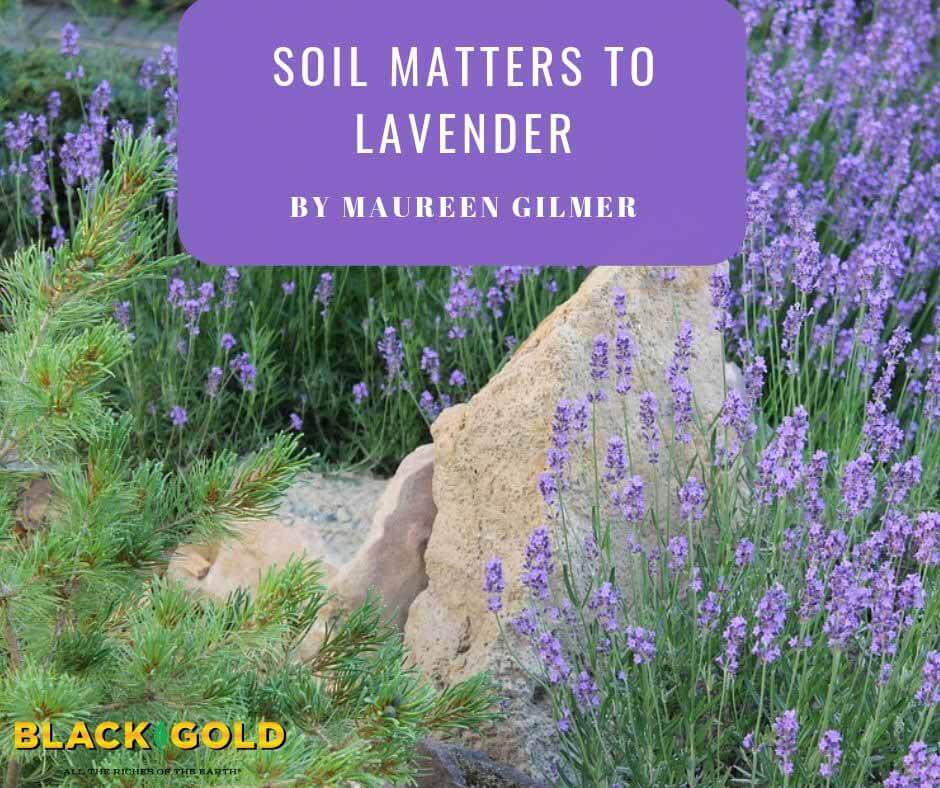
Soil Matters to Lavender


Distinguished by long thin wand-like flower stems, English lavender is the hardiest of them all.

The Serenity Prayer asks us to “accept the things we cannot change, the courage to change the things we can, with the wisdom to know the difference.”  If you’ve tried growing lavender with little success, maybe it’s time to identify what you can change to make this year’s garden a fragrant bee filled blend of drought-resistant lavenders for landscaping. It only takes a little wisdom to make a difference.

french lavender
French lavender is the commercially grown species popular throughout southern Europe.

Origins

Lavender comes from Europe where it has been grown in the South of France since Roman times.  There, the Mediterranean climate mirrors that of California where winters are wet and mild with long dry seasons extending from May to as late as December. These plants are naturally adapted to loose friable soils, sandy loam and fill soils that don’t pack down.  In areas with persistent humidity, extensive summer rain, and dense acid soils, lavenders languish.

A Need for Porous Ground

Naturally, fast-draining soils ensure the roots are exposed to plenty of oxygen during the growing season, and if irrigated or rain falls, it moves in and out of the root zone quickly.  Such porous ground, particularly on a south-facing slope, helps to counteract the slow soil surface evaporation caused by humid climates with stagnant air.

spanish lavender
Larger flowers and a shorter stature define the heat-tolerant Spanish lavender.

In northern California where rainfall can be very heavy in winter and soils are dense and extremely rich, lavender struggles despite its preference for the climate.  Fields now growing commercial lavender are plowed into mounded rows well above grade to enhance drainage and keep the root zone sufficiently aerated.

Amending Soil

Fortunately, the soil is among the things we can change by adding amendments that open its structure.  Prepare the natural soil by blending it with pumice and Black Gold Garden Compost Blend.  Use this enhanced mix to raise up the soil surface so the crown or base of the stem of the plant is above the surrounding grade.  This is also a good way to create soils that are perfect for rocky outcrops and raised beds where lavender thrives.

In San Francisco where conditions are cool and damp, growers prefer to mulch their lavenders with minerals such as washed sand or decorative gravel that help reflect heat back onto the plant. This porous material also creates a dry barrier between damp soil and the plant foliage to discourage mold.

Choosing a Lavender

varieties
All three species have yielded endless horticultural varieties to choose from.

Before you select a lavender for marginal areas, consult a local expert to find the best species and or variety to match your microclimate and soil conditions.  They vary in cold hardiness, size, and color from the cold-tolerant English lavender to a Spanish lavender to fill that super hot spot.  And for those romantics who love the notion of true French lavender in the garden, these plants will be the genesis of homemade tinctures, fragrant waters, sachets, potpourri, soap and a wide range of natural herbal cosmetics.

Once you know what to plant, select a sun-filled area and improve the soil for drainage, then plant in spring so there’s plenty of time to adapt your ground before the summer heat and fragrant flowers to come.

Swanky Succulent Container Gardens


Succulents - Maureen Gilmer - Feature Image
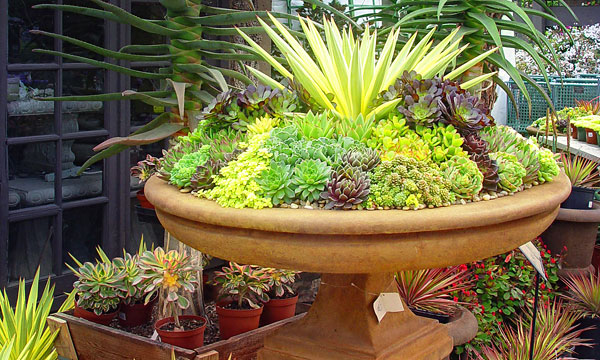
Succulents: Elegant pedestal urns feature rounded mounds of succulent plants topped with a crown of spiky leaves.

Nestled into opulent coastal southern California is a nursery where I go to find out what’s hot in the world of container gardening. Decades ago Rogers Gardens was founded on flower-filled hanging color baskets so fabulous they draw tour buses daily. I worked there in the early 80s and today I return to see how they display every hot trend in container gardening. Most of what I see can be recreated using Black Gold specialty potting soils to make your home garden just as exciting this year.

Mesclun - Maureen Gilmer
Mesclun: Integrating colorful lettuce into pots and gardens makes more opportunity to snip for dinner.

GREENS

Edible greens are proving to be one of the most interesting plants for both ornamental and food gardens. At Rogers they are displayed in glorious color from purple kale to pastel mesclun mixes of curious gourmet lettuce and greens. Potting them into decorative containers is easy when you use Black Gold Natural & Organic Potting Soil. Blend these with edible flowers and culinary herbs for beauty you can snip and pinch into salads, soups and as decorative garish.

Flax - Maureen Gilmer
Flax: Latest looks include dark burgundy Aeonium and bright red striped Phormium combine in terra cotta.

SUCCULENTS

Growing succulents in containers demands fast draining Black Gold Cactus Mix. Such porosity allows you to cram dozens of colorful rosettes into the same pot without concern for rot setting in. The latest look is combining vivid autumn colored foliage plants such as New Zealand flax hybrids with gobs of succulents for perfect compatibility.

Mediterranean - Maureen Gilmer
Mediterranean: Woody rosemary topiary sits atop high-contrast succulents.

MEDITERRANEANS

Demand for drought resistant plants and popularity of Spanish inspired architecture puts Mediterranean species front and center. The creation of topiaries from rosemary and fruitless olive provides excellent form and fragrance with other less European selections. Fruitless olive and its dwarf cousin ‘Little Ollie’ are hot right now to accent Mediterranean inspired architecture. Blend them with succulents or low profile herbs in traditional terra cotta pots for focal points on patio and terrace. Use Waterhold Cocoa Blend Potting Soil to retain moisture and reduce the need to water often, making these creations even more water conservative than Mother Nature planned.

Herb Box - Maureen Gilmer
Herb Box: Old boxes repurposed at Rogers for a small space herb garden or a super gift idea.

HERBS

Every foodie needs an herb garden filled with the best culinary species. At Rogers this year they’ve used old wood crates to create rustic herb gardens perfect for an apartment balcony, a condo courtyard or even a small roof garden. It’s truly amazing how useful they are when ganged together like this, offering lots to pinch and pluck. Since so many herbs come from arid climates that lack summer rainfall, try Hy Porosity Natural and Organic Potting Soil which helps them stay high and dry during rainy summers.

During my years at Rogers I learned that one potting soil doesn’t fit all plants. That’s why Black Gold offers so many options. Use the right ones so you can be just as successful with your succulents, Mediterraneans, edibles and herbs no matter where you live.

Black Gold Soil Plants Hope Along With Veggies

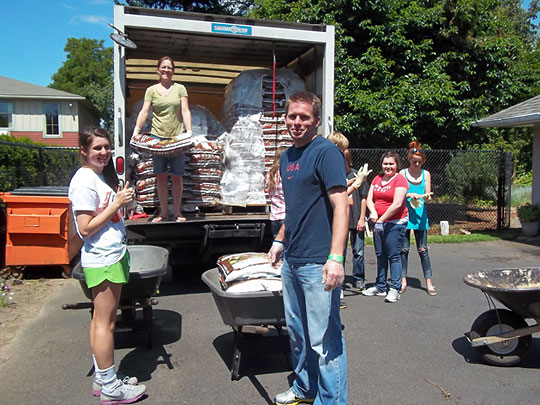
Black Gold®, manufacturer of potting soils, amendments and fertilizers, is accustomed to helping gardeners of all kinds plant herbs and veggies, but they also help others plant hope. Recently, a large donation was made to Portland Rescue Mission, a Portland-based non-profit organization that provides assistance to local homeless men, women and children. The donation, consisting of over 3 pallets of soil and fertilizer with a value of over $2,300, will be used at the Portland Rescue Mission women’s shelter, Shepherd’s Door, to allow for the development of a new community garden.

Unloading Donated Black Gold Soil
Volunteers help with unloading the more than three pallets of soil donated by Black Gold.

The women residents will maintain a raised garden where they will have the opportunity to learn gardening skills, supply food for the kitchen, and heal. “We believe in anything that is therapeutic for the women, and this will give them therapy and fulfillment,” says Jan Marshall, Director of Shepherd’s Door. “And it’s beautiful! It’s the perfect timing. They were all so happy to receive this donation.” Shepherd’s Door is a shelter where women who have experienced violence and abuse can receive housing, nutrition, counseling and training. Unlike other women’s shelters, Shepherd’s Door residents can care for and live with their children while they engage in recovery for 12-18 months.

Donated Planters with Black Gold Soil

While Black Gold® product lines are being launched nationally in 2012, they make it a priority to help locally whenever possible. Portland Rescue Mission is a frequent recipient of Black Gold® generosity as they received large donations for fundraisers and silent auctions numerous times over the last three years.

Company Profile

Since 1983, the Black Gold® product line has been available at many fine garden centers for the gardening delight of their customers. Known as the brand of choice for the gardening enthusiast, the Black Gold® product line is available throughout the United States and Western Canada. Offering a full line of products to meet almost every gardening need, including products listed by the Organic Materials Review Institute, Black Gold® offers one of the most complete selections of mixes, amendments and fertilizers to fit your gardening project.


Build Organic Garden Soil with Black Gold

Building organic garden soil is the same as working the soil for any other kind of garden except for one thing: you must feed the soil with OMRI Listed products for organic gardening. The ground below your feet is not just dirt but a whole living breathing universe unto itself. Within those soil mineral particles are populations of microscopic bacteria, fungi, yeasts, protozoa and algae. They are collectively known as microbes, which feed on the remnants of dead plants, also known as organic matter. Organic gardens depend on high microbe populations to make plants grow strong naturally, resist pests and diseases, and produce a bumper crop of food or flowers.

Continue reading “Build Organic Garden Soil with Black Gold”

Better Results All Season Long with Black Gold®

Black Gold All Purpose with Multicote Potting SoilWith the advent of Black Gold® All Purpose, you are now able to enjoy the benefits of a premium quality potting soil with a fertilizer that will feed your plants for up to six months. Sun Gro sells this same fertilizer product to professional growers. By incorporating Multicote® into your potting soil, your plants will have a consistent supply of nutrients throughout the entire season.

Multicote®, a controlled release fertilizer, has been coated with a polymer that slowly breaks down to release the nutrients over time. Unlike other controlled release fertilizers in the marketplace, Multicote® will not release excessive nutrients in higher temperatures, thus ensuring your plant will thrive no matter what the weather. This baseline of fertilizer allows your plants to grow all season long, not just when you remember to fertilize. Additional fertilizations with a liquid fertilizer, starting a couple weeks after planting, will ensure your plants get all the nutrients they need, particularly if your plants are heavy feeders.

Ideal for all types of plants, Black Gold® All Purpose with Multicote® is a great choice for house plants, patio containers and hanging baskets. Canadian Sphagnum Peat Moss with earthworm castings, forest humus, compost and pumice combine to provide your plants with both moisture retention and good drainage. Since this potting soil has a higher amount of peat moss, it is ideal for gardeners looking to reduce their fertilizer and water usage.

Think of all the benefits – you start with a premium potting soil; add a controlled release fertilizer that will lessen the frequency of fertilizing; and you get improved plant performance by using Black Gold® All Purpose Potting Soil with Multicote®.

Perlite and Pumice in Potting Soil

BG Perlite frontHave you ever wondered what those little white things in your potting soil are? In most instances they are perlite and/or pumice. Perlite is a mined siliceous rock that is heated and expanded, or “popped” like popcorn, into a white lightweight material, while pumice is a soft, insert-mined stone that often comes from Oregon. What makes Black Gold® Perlite and Black Gold® Pumice particularly desirable is that both are screened for uniformity, with the finer particles removed.

Both perlite and pumice are porous aggregates, meaning they are added to a potting soil to improve aeration and drainage. The addition of perlite and pumice in a potting soil will also increase the moisture and nutrient retention of the potting soil. Just like peat moss, they act like reservoirs in retaining water and nutrients and release them when they are needed by the plant.

Due to its weight, pumice provides bulk density to a potting soil. This trait is valuable when you are growing outdoor containers and you don’t want them to blow over in the wind. Pumice is often the aggregate choice for specialty potting soils (cactus, bonsai) because it provides great aeration and helps anchor roots.

In addition to being a potting soil mix component, perlite is an excellent neutral medium for starting seeds and rooting cuttings. It can also be used to store bulbs and as an essential hypertufa planter ingredient.

The Best Seedling Mix for Germination and Cuttings

BG Seeding Mix frontBlack Gold® Seedling Mix is the best seedling mix for germinating seeds and propagating cuttings. The mix is designed to promote better root development in young plants.

We start with a careful blend of Canadian Sphagnum Peat Moss (which has been double-screened to remove larger particles and sticks); fine perlite and vermiculite to give seedlings and cuttings the aeration and moisture retention they need to develop a good root system. A wetting agent ensures rapid water penetration, and the fine texture encourages high germination and rooting. Transplanting your seedlings and cuttings will be a breeze when plants develop strong root systems as they are grown in Black Gold® Seedling Mix.

When it comes to germinating seeds, it’s simple – all you need is water, light and Black Gold® Seedling Mix. Making sure the growing media stays moist and seeds or cuttings have plenty of water in the early stages of germination or rooting is critical. Our seedling mix is designed with both peat moss and vermiculite, critical ingredients when you want to retain just the right amounts of moisture in your soil. Whether you are starting your seeds in a pot or a tray, they should be kept at temperatures between 60 and 70 degrees and placed in bright but not direct light – a southern exposure is ideal. Some seeds need darkness to germinate, so be sure to check your seed packet for details.

Black Gold® Seedling Mix is made with the same ingredients we use to make our seedling/propagation mixes for commercial greenhouse growers. Seeds typically need to be covered with Black Gold® Seedling Mix at a depth three times the diameter of the seed you are germinating. Larger seeds and seeds planted during warmer times of the year typically need to be planted deeper. Germinating your own seeds or rooting your own cuttings is a rewarding experience and one of the great delights of gardening. So when you are faced with the question, “Why buy a premium seedling mix potting soil?” the answer is clear. When you use Black Gold® Seedling Mix your seedlings and cuttings will have a great place to grow up.

The Best House Plant Potting Soil

BG African Violet front-2Do your houseplants need to be re-potted? If so, Black Gold® offers a wide variety of product choices. We have four specialty mixes to choose from in addition to three standard all-purpose mixes. They are the perfect house plant potting soils.

Black Gold® African Violet Mix – Finicky African violets thrive in this blend of Canadian Sphagnum Peat Moss, compost, pumice, earthworm castings and screened forest humus. The pH has been balanced to create the optimal rich and porous medium for growing foliage and flowers. African Violets must be pot-bound to bloom, so it is important to choose the correct size of pot. You should choose a pot that is 1/3 larger in diameter then the plant, and keep in mind African Violets need to be repotted every six months. The new potting soil will give the plant new organic matter and nutrients, and will reduce the build-up of salts.

Continue reading “The Best House Plant Potting Soil”