

Articles

House Plant Ideas for Winter

While there are always many things we can be doing in our garden during the winter months, it is also a time to give some thought to different house plant ideas. Here in the Pacific Northwest, I have been doing quite a bit of transplanting in my outdoor garden, and as I am probably like many gardeners, I have plants in the wrong places. Short plants are behind tall plants and vice versa.

Also, as the garden changes, so does the gardener. Often we want to add new plants and that may require removing some old ones. This is a good time of year to do some ‘editing’ of your garden. And while you are ‘editing’, if it involves removing plants, consider offering your discarded plants to others.

I think many of us overlook the value of having house plants and this is a good time of year to think about them. I must admit there are very few in my house but I do enjoy seeing them in other homes. There is a wide range of choices of many tropical and semi-tropical plants that would not survive outside, but do quite well indoors. Just like outdoor plants, some can be temperamental but many are easy to grow and enjoy indoors. I often remind myself that all house plants are living outside in some locale and it is our task to consider where the plant is from and adjust our environment as much as possible. The following are some house plants that I have selected as being relatively easy to grow.
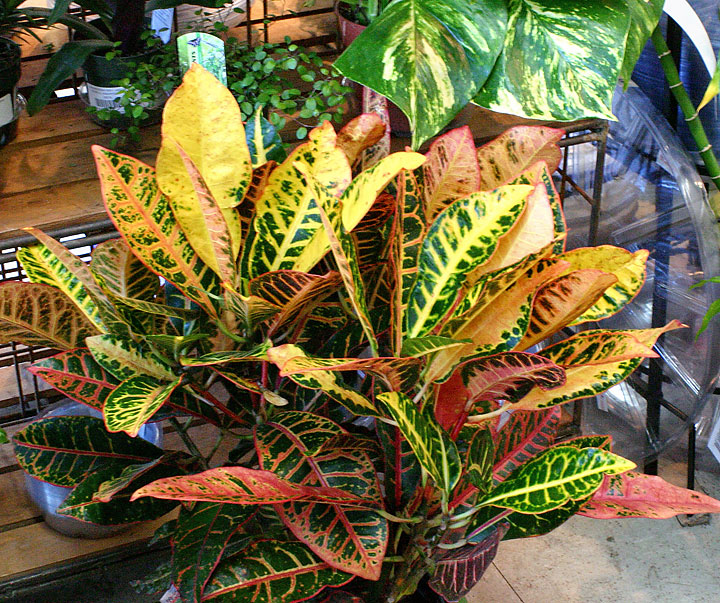
CrotonCrotons

It would be difficult to find a group of plants that provide more splash of leaf color than the Crotons. These fantastic foliage plants are easy to grow and are available in a wide assortment of leaf colors ranging from yellow, purple, red, pink, green or almost any combination of these colors. Crotons can grow tall but if trimmed, they will branch out and remain quite bushy. In order to keep the leaf colors vibrant, place plants in a location with plenty of light. Often times I have seen several different plants all planted in the same container and this creates an extremely colorful effect. Purchase several different plants, with different leaf patterns and colors, and plant them all in the same container using Black Gold Natural & Organic Potting Soil. With the addition of perlite and pumice into this potting soil, this greatly helps with drainage which is essential for most house plants to survive.
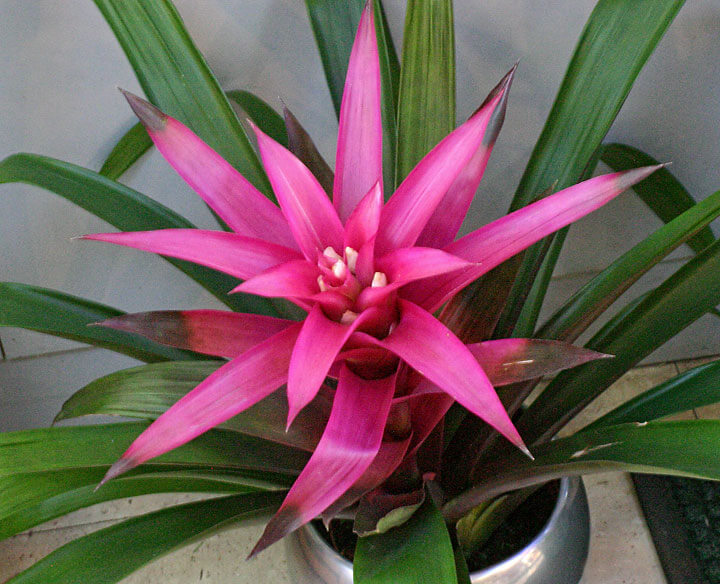
BromeliadBromeliads

If the colored leaves of Crotons are not quite your style, consider Bromeliads. With their sword-like leaves, the new growth can offer some very intensely bold colors. The lower leaves act as a reservoirs and it is best to keep clean water in these spaces. If you live in an area with heavy chlorination in your tap water, it would be wise to use distilled water. Bromeliads provide long lasting color in the upper leaves and while this main stalk will eventually die, the plant will usually produce a new shoot or shoots near the base and this can be cut and planted. Keep plants away from direct sunlight. Some leaves can be quite sharp so beware of this especially if there are young children around.
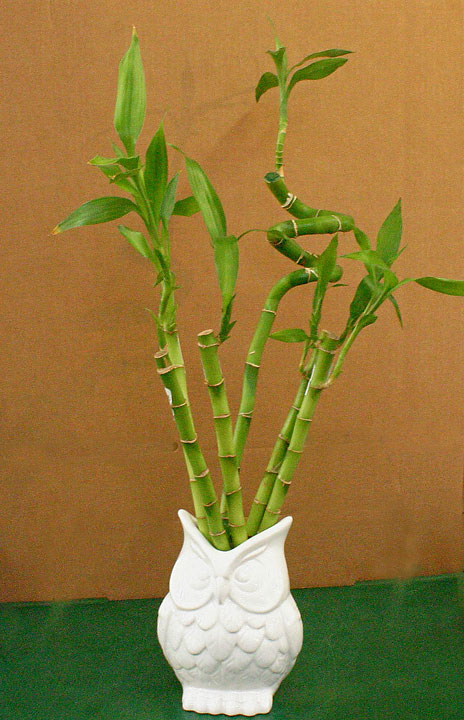
Dracaena Lucky BambooLucky Bamboo

For a house plant that I would consider ‘fun’ and one that children would enjoy, consider Dracaena sanderana, often referred to as ‘Lucky Bamboo’ or ‘Curly Bamboo’. This Dracaena is usually sold as stems that are to be placed in water to root and then planted. It is an ideal learning tool for children because often the stem is purchased with no roots and within several weeks, roots will appear and children can watch as the roots develop. There will be buds along the stem and these will begin to swell and grow into new leaves. For a novelty, try ‘Curly Bamboo’, once you see it, you will know how it got this name. ‘Curly Bamboo’ is especially popular with children. Be sure to change the water in the vase on a regular basis and keep it clean. Once a mass of roots has developed, the stem can be placed in a pot with Black Gold Natural & Organic Potting Soil and the plant will continue to grow.
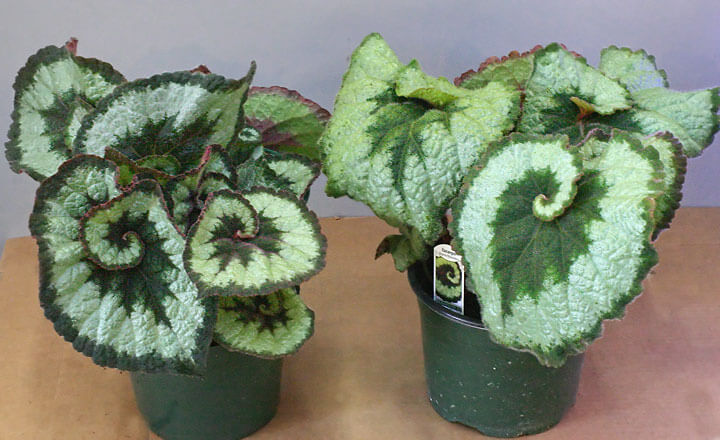
Begonia EscargotRex Begonias

Another group of plants that make ideal house plants and are easy to grow are the Rex Begonias. One of my favorites is called ‘Escargot’ and when you see the leaf, you will understand why! Rex Begonias will grow fairly well in the low light conditions that many houses have and they tend to prefer to be a little on the dry side. They will bloom with small white or light pink flowers and are long lived. Many Rex Begonias will do well outdoors in a shady location during the summer and makes a nice patio plant.

Just because we are in the middle of winter does not mean there is not gardening to be done; it just changes from outdoors to indoors. Check out your local garden center and you will probably be surprised at the offerings of indoor plants that are now available.

Special thanks to photographer Rich Baer, who took all the images that accompany this article.

Succulents Squared

Succulent Square by Brian Jacob
Succulent Square. Photo by Brian Jacob

There are many fun things to do with succulents and a recent trend is to use them as pockets in a wall or planted in a wooden ‘picture’ frame and used either vertical or horizontal. In this particular photo, the wooden frame of succulents is part of a fence and notice the variety of colors and leaf shapes that have been used. This same succulent square could be used as a centerpiece on an outdoor table. For projects like this, or any succulent planting, be sure to use Black Gold Cactus Mix.

Painted Poppy Seed Heads

Purple Poppy Seed Heads
Gardening should be fun and I love visiting a garden and seeing the unexpected. I especially like it when it makes be smile. These might be considered as odd looking breadseed poppy (Papaver somniferum) seed heads, and they certainly are. The owner of this garden painted them purple to compliment some purple flowers in the background. I have seen people stop and ponder these seeds heads and then ask the owner what variety they are!

Abutilons as House Plants

Abutilon Red Tiger
Surprise your guests with an Abutilon in bloom as a house plant. As long as these Abutilons have a good light source, they perform well indoors and then can be planted outside in the spring. This particular Abutilon is called ‘Red Tiger’ and the flowers look like fine cut glass. It is an outstanding plant in a pot, either in a house or on a deck, and when people visit my garden and see this in bloom, they are amazed at the colors and pattern. Be sure to plant Abutilons in Black Gold® All Purpose Potting Soil with Controlled Release Fertilizer.

Schefflera delavayi

Schefflera delavayi
Many of us are familiar with the houseplant Schefflera as it is fairly common and easy to grow. Several years ago I was given Schefflera delavayi and was told it was an outdoor plant that would grow in my Pacific Northwest garden. I was skeptical but planted it outside. Now, after several very cold winters, my plant is thriving with no winter damage, shiny green leaves, and growth to about six feet. It gets morning sun but is protected from hot afternoon sun.

Christmas Trees, Wreaths, Paperwhites

Lot Christmas TreesWhen buying a cut tree at a lot, keep in mind that the tree has probably been cut for several weeks and it could even be several months. When the tree is cut, it is a natural response for it to seal off the cut in order to conserve moisture. Since the butt end is sealed, it can only absorb  a small amount of water, if any.

This is the reason it is so important to make a fresh cut of about an inch from the butt of the tree just before the tree is going to be taken indoors. Once this cut has been made, the tree should be placed in a bucket of fresh water or placed in the tree stand with fresh water. You may be amazed at how much water the tree will absorb especially during the first few days. Research that I have seen indicates that there is no need to add a preservative, fresh water works just fine. Check the water reservoir in the tree stand several times a day and refill as necessary. If the water level goes below the butt end of the tree, it will begin to seal itself up and this will prevent uptake of water. It is also a good idea to place your tree where it will not be getting warm air from a heater vent.

Living Christmas Tree

Living Christmas TreeThe term ‘living’ tree refers to a tree that is alive and growing and in a nursery container. This is in contrast to a ‘cut’ tree. Check out your local garden center for the varieties of living trees available. Growing in a container with soil, a living tree will be heavy to move around and since they will need to be watered, be sure to have a waterproof saucer under the container.
Bringing the tree from outdoors to the warm temperatures of a house can be quite a shock. If there is enough time, a good idea is to place it in a cool garage for a couple of days before bringing it indoors. Place the tree by a window and away from any heat vent. If you are going to put lights on it, use those that do not get hot. Generally a ‘live’ tree should not be indoors more than 7-10 days.
When it is time to take it outdoors, if the temperatures are below freezing, it is a good idea to put the tree back into a garage for several days instead of taking it from a warm house to a freezing outdoors. Once the weather has warmed, the tree can then be planted. Another idea is to plant the tree in a nice container and keep it on a deck or patio and then bring it indoors as a Christmas tree for several years. Before planting, be sure to amend the planting area with Black Gold Canadian Sphagnum Peat Moss Plus.

Wreaths from the Garden

WreathsThere are some wonderful wreaths being offered for sale, many with fresh material from local growers. If you have a supply of greenery, wreaths can be fun to make and give as gifts especially when the materials are from your garden. Fir, pine and holly are traditional, but consider adding something new.
Many cotoneasters are covered with red berries at this time of year as is firethorn (Pyracantha coccinea). I have a friend that has a small business making wreaths and he uses juniper (nice fragrance and of course the blue berries make a nice contrast to the green of other plants), sumac flowers, evergreen Magnolia, Nandina, sweet bay, rose hips, Skimmia, and even dried hydrangea flowers that have a natural look. Most of these materials will hold up very well outdoors as long as they do not get wet from the rain.

Paperwhites

Paperwhite narcissus bulbs are very easy to force into bloom indoors. They will often bloom within 3-4 weeks of planting. All that is needed are healthy bulbs and some kind of dish or pot with no drainage. A traditional method is to put in a layer of gravel (many types available at garden centers especially for this purpose), place bulbs on top and bring water level just beneath the bulb. Place container by a window and keep water level constant.

One of the major drawbacks with forcing paperwhites is that they get tall and flop over. Some research from Cornell University indicates that by adding some ethyl alcohol will stunt the growth but you will still get the flowers. About a 5% (no stronger or it may burn plants) solution of ethyl alcohol is required, and so from a 40% distilled spirit such as gin, vodka, rum, etc, you would 1 part of the spirit and 7 parts of water. For this to work, add plain water as normal for the first week and then begin using the alcohol/water solution. Continue using this solution until the plants begin to bloom.

If you do not want to use ethyl alcohol you have for drinking, rubbing alcohol also works. It is about 70% alcohol so 1 part rubbing alcohol to 10-11 parts water would be appropriate. Do not use beer or wine as the sugars in them can cause some problems with plants. I tried this last year and it worked!

Enjoy the season!

Growing Indoor Air Plants

Air PlantsSome of the easiest house plants to take care of are those special plants in the genus Tillandsia, which are commonly referred to as ‘air plants’. They naturally grow in trees in tropical and subtropical regions, so they grow with no soil. In the home they can be placed almost anywhere. Many indoor air plant growers favor growing them in bathrooms where winter air remains moist.

Air plants tend to thrive as long as they are given indirect light (no direct sunlight) and a weekly spray of water. Warm, humid air will also keep them surviving at their best. With this simple regime, they will live for many years.

Try placing them in a vase, as in the photo. There are many wonderful species and varieties of air plants to choose from. These bromeliads can have silvery or green leaves of varying shapes and widths. Colorful, bracted spikes of flowers may appear in plants that are growing happily. Bloom times vary.

Hydrangea 'Shooting Star'

Hydrangea Shooting Star I think a plant makes an especially nice winter gift for the gardener if it is blooming and so can be enjoyed indoors and then later planted in the garden. Hydrangeas from a garden center (not a florist) are usually good choices. One of my favorites is Hydrangea ‘Shooting Star’. It blooms for a long period indoors and once spring has arrived, can be planted in the garden as a permanent plant.

The Visitors: Garden Art

The Visitor
Garden art comes in many shapes, sizes and forms and often can reflect to something about the gardener. I love visiting gardens and seeing creative garden art that has been found, bought, or made. This past year one of the most original pieces I saw was a group of colored mannequin heads mounted on posts. In this garden, they looked as though they belonged and the owner titled them “The Visitors”. Make a resolution for 2012 to collect something unique for your own garden.

Happy New Year!

Indoor Gardening With Black Gold®

NOandSEEDLING

There is no reason we need to stop gardening just because summer is ending and winter will soon be here. Many gardeners that I know ‘switch gears’ and set up a special place where they can continue to garden indoors. It might take a little more effort but it is worth it, not only with what you can grow, but the idea you have accomplished what some perceive as difficult.

Think for a moment of the many summer herbs we have enjoyed in our outdoor gardens. Wouldn’t it be great to extend the season with new plants that you have grown in the winter but are perceived as summer plants? If you can supply similar conditions to what the plant has been accustomed to in growing outdoors, then you are off to a good start. One of my favorites is basil and this is an example of a plant that can also be easily started from seed indoors as long as the right conditions are present. The right conditions include the proper soil mix, artificial light, warmth, and space. Artificial light may or may not be a requirement depending on your location and whether you have strong winter light. In Western Oregon and Western Washington, we could certainly need supplemental lighting for most indoor herb plants or plants that are generally perceived as outdoor plants. There are some low light house plants, but I am not including them.

Some garden centers carry indoor lighting kits for homeowners but if you are going to be growing any quantity of plants, you will probably need to find a store that sells materials for hydroponic gardening. Hydroponic garden supply stores will have a good selection of indoor lighting and can give you tips and information depending on your particular circumstances. If you do not know a hydroponic store in your local area, I suggest you go to Sunlight Supply, Hydrofarm or Bloomington Wholesale websites to find a store near you.

If your home has a basement, this can often provide ideal conditions for starting seeds. I have a friend with a basement and he sets up a table with artificial lights, heating pad and everything he needs to start seeds in the winter. He has used this method for many years to start seeds ahead of the season and then he sets plants out when the weather is appropriate for whatever crop he has. Often he grows some of his favorite herbs from seed and then harvests them and uses them in cooking throughout the winter.

Once you have done some research and have the basic supplies, you will need to start with a seedling tray and a good soil. Most garden centers will stock seedling trays which will allow you to plant many seeds in a small area. For soil, Black Gold Seedling Mix is an ideal choice. Black Gold Seedling Mix is formulated with a wetting agent to provide quick water penetration and is a very fine texture to help with germination. It also contains perlite to provide good drainage which is very important with indoor grown container plants. One of the problems that can arise from starting seeds indoors is a disease called damping off. It affects young seedlings and causes them to die. A listener on my radio program once told me of an organic way of preventing damping off. This listener grew many of his plants from seed and used fine grade chicken grit and lightly coated the soil with this after the seeds had been planted. Most farm or feed stores would carry chicken grit and it can usually be purchased by the pound.

Once the seeds have germinated and the young seedlings have developed their true leaves, it is time to transplant these seedlings into an individual pot. Gently lift them out of the plant tray and place them in their new home. I usually use a four inch pot as this size is large enough for the plants to grow for several weeks and the pots are large enough that they are easy to move around. My soil of choice for this four inch pot is Black Gold Natural & Organic Potting Soil. This is 100% organic and contains screened earthworm castings, which Black Gold is famous for using, as well as sphagnum peat moss, compost, forest humus, perlite, and pumice. The perlite and pumice are added to insure good drainage and good aeration, both essential for optimum plant growth. It is important to water these newly transplanted seedlings immediately. If you are a novice at this, be sure you have a tray to hold the four inch pots and to act as a reservoir for holding the excess water as it drains out from the pots.

Always make sure your plants have adequate light. With indoor plants, light is a crucial issue. If plants begin to stretch and become ‘leggy’, that is a signal they are probably not getting enough light. After several weeks and the plants are established and growing, it is probably a good time to fertilize them. I like to use some type of water soluble fertilizer, meaning I can dissolve the fertilizer in a watering can and then fertilize my plants as I water. The fertilizer you select will be dependent on the particular plant and what you expect from it. If you are growing a plant for foliage, you will probably want high nitrogen (first number of fertilizer analysis). If you are going a plant for root development, then look for an analysis with a higher middle number (phosphorus). There are some plants you may want to encourage growth in the early stages and then switch to high phosphorus for bloom and/or root development. Talking with other gardeners that have had experience with indoor gardening can be a wealth of information.

It may sound difficult, but it really is not. It is always fun to try something new in gardening and perhaps this is your year to try growing plants under lights.