


Spring has finally arrived and we are having sunny days and warm weather. It has been a long time coming. It is exciting to walk around the garden and see what new plants are showing growth. This picture of a Gunnera in my garden is showing new growth. It is obvious that I need to amend the soil and that will be done soon. Gunnera likes a moist soil, wet but not standing water. I will soon work Black Gold Garden Compost Blend into the upper several inches of soil as well as some OMRI Listed general purpose fertilizer.
Tag: Mike Darcy
Preparing the Soil Before Transplanting Seedlings

One of the most important tasks of getting the garden ready for transplanting seedlings is preparing the soil. Whether you will be setting out small transplants or planting seeds directly into the garden, the soil is something that needs to be prepared prior to planting. In my own garden, I use Black Gold Garden Soil and work it into the soil before planting or seeding. The photo shown is lettuce that has been planted in a soil that has been amended using this simple process and Soil Conditioner. This lettuce should grow and thrive in the healthy soil.
March 9th, 2012 – KXL 11th Annual Plant Nerd Night

The 11th Annual KXL Plant Nerd Night was a huge success!
Since the beginning, 11 years ago, Black Gold has been a sponsor. This event heralds spring and brought out over 600 avid gardeners, some arriving nearly three hours before the doors opened. Those early birds brought their own chairs and coffee and had a good time visiting with others as they waited in line.
Continue reading “March 9th, 2012 – KXL 11th Annual Plant Nerd Night”
Kids and Compost

In my garden, I have a compost pile that gets our kitchen vegetable scraps, coffee grounds, tea bags, and grass clippings. As you can see by the photo, I believe it is important to get kids involved in gardening and letting them learn about compost and worms is a good start. Compost is so beneficial to the soil and I add some whenever I am setting out new plants. I never have enough of my own and so I am constantly using Black Gold Garden Compost Blend when planting. It is amazing how much it improves the soil.
Ginkgo Biloba Mariken

At the recent KXL Plant Nerd Night, sponsored by Black Gold, one of the ‘hot’ plants was Ginkgo biloba ‘Mariken’. This is a dwarf Ginkgo with soft green leaves in summer, turning a brilliant gold in the fall. This is a winter-hardy plant for our area and would make a great container plant. I have one in a pot on my deck and am looking forward to its beautiful foliage this summer. Actually, I have several dwarf Ginkgo plants in containers and find they thrive with Black Gold Natural & Organic Potting Soil. Ginkgo Biloba Mariken
Cow Pots: An Organic Alternative to Plastic Containers
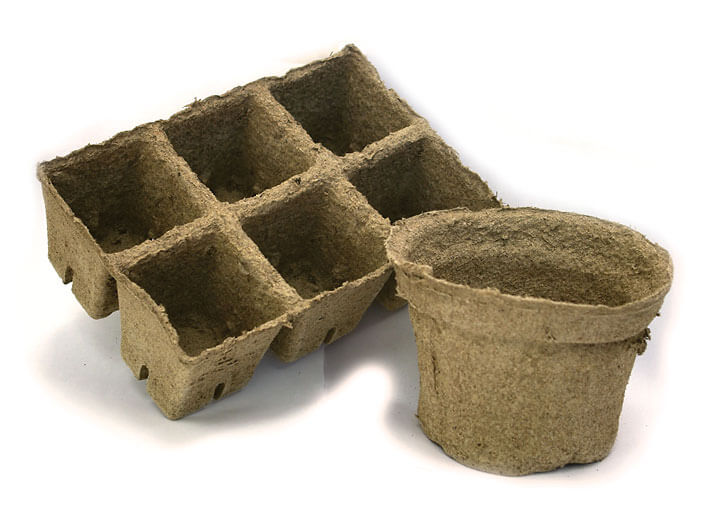
When starting seeds indoors, some kind of container needs to be used and there are many materials available. Plastic pots have often been a choice but there is a trend, especially among many gardeners, to try to be less dependent on plastic. Consider Cow Pots for your seedling this year. Made from composted cow manure, they can be planted directly into the soil. They are odorless, non-toxic and promote recycling agricultural waste. And another benefit is they provide nutrients for your plants.
One source of Cow Pots is TerritorialSeed.com. And when starting seeds, be sure to use only the best seed starting mix, OMRI Listed Black Gold Seed Starting Mix!
Kids Gardening: Growing Radishes
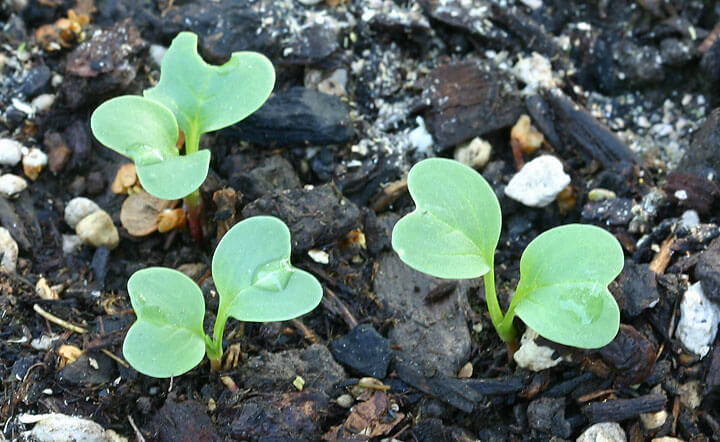
It is always fun getting children involved in a gardening activity and allowing them to start plants from seed is a great introduction to the world of gardening. When choosing a gardening activity for children be sure to pick something that will germinate quickly, grow fast, and mature in a short time. Growing radishes with kids is one easy way to make gardening fun!
Radishes are a good choice. They will germinate in only a few days in spring, if planted in full sun and grown in fertile ground amended with Black Gold Garden Compost Blend. The process is simple: create your rows, sprinkle the seeds along them, cover lightly and then water. Your kids should check them every few days for germination.
Once the seedlings have germinated, thin them to a distance of around 2 inches apart. Then give them good care, making sure they get a drink every few days or so. In only 40 to 45 days you will have crisp, sweet radishes. Kids just loving pulling them from the ground!
Mild-tasting varieties, like the French breakfast radish ‘D’Avignon’, are best for small children.
A Bowl Full of Sedums
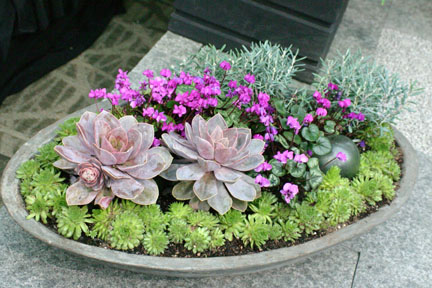
Ordinary sedums can create a stunning arrangement in a shallow bowl. The sedums shown in this photograph are readily available at garden centers and could be kept indoors for several weeks and then taken outside. Notice what the addition of some low growing and blooming cyclamen can do to draw the eye to this arrangement. Place the bowl in an area with plenty of light but not direct sun. Use Black Gold Cactus Mix for your potting soil and be certain the bowl has drainage.
Growing Unusual House Plants
Oft en times when we think of house plants, we neglect to think of the many outdoor plants that might make enjoyable and unusual house plants, if given the right conditions. Or if we cannot duplicate the right conditions, many will at least last for several weeks or longer and then taken back outdoors. But during this interval, we have been able to enjoy them indoors.
There are many factors involved with growing plants indoors and proper light is probably the most important. As I looked at plants in my garden this past summer, I discovered there were many that could be brought indoors during the winter months and then placed back outside in the spring.
Cordyline
One of my favorite outdoor plants that can be grown inside is Cordyline ‘Festival Grass’. ‘Festival Grass’ can easily be grown as a house plant during the winter in a sunny window. This New Zealand native forms a fountain-like clump and has brilliant narrow burgundy colored leaves. The plant in the photo was taken in my garden in August and this pot was planted with three plants the previous spring as I wanted to make certain it was a very full pot since it would be at the entryway to our house. So, imagine if you had one of these in a sunny window during the winter and the bright color it could bring to what might be a drab space. In the spring, take the plant outdoors and place in a sunny location.
When I lifted the three individual plants of Cordyline from this large pot, I separated and planted them in individual pots using Black Gold Natural & Organic Potting Soil. At the time of re-planting I also added some all-purpose fertilizer, which was sufficient to provide enough nourishment to keep the plants healthy during the winter. Once the weather warms, I will take these individual plants outside and plant them all together in another large container.
 Succulents

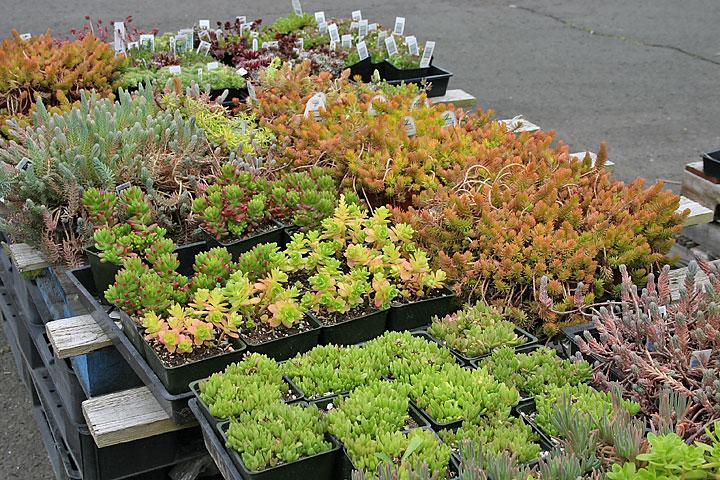
Succulents are a huge group of plants and many will thrive indoors in a sunny window. This photo was taken at a local garden center last summer and it shows some of the leaves and colors there are to choose from. You will find foliage colors of green, gray, yellow, shades of red, and some that are almost blue. The way succulents grow is as variable as their colors and there are upright varieties and other varieties that will trail over the side of a container. Succulents want as much light as possible so a sunny window is usually ideal. Succulents also need excellent drainage and I have found that Black Gold Cactus Mix is ideal. Be sure to select a container with a hole in the bottom so water can drain out. Succulents usually do better with less water than many other house plants and I have found that letting the soil get dry to the touch and then giving them a thorough watering works well.

For a splash of bright yellow, try Sedum ‘Ogon’. Like many plants with yellow foliage, this one does best if not in full sun, and while it needs light, keep it away from a bright sunny window. If plants tend to get a bit leggy stretching for light, it is easy to pinch the tops and you will create new growth and a more dense plant. Sedum ‘Ogon’ is ideal to plant around the base of other house plants and the bright yellow makes a nice contrast to the dark green of many common house plants. Be sure to use Black Gold Cactus Mix as your potting soil of choice.

Another excellent indoor/outdoor plant is Crassula ovata, commonly called Jade Plant. It is easy to grow outdoors in our Pacific Northwest summers but in a container can sometimes not survive a winter if temperatures drop too much. I think it is better to be safe and bring it indoors in the winter. It is well adapted to growing indoors and can look stunning in a container such as the red one shown in the photograph. Jade plants will often bloom and have clusters of pink star-shaped flowers.
Sometimes one of the most difficult rooms to grow house plants in is the bathroom. For an unusual house plant that will often thrive in a bathroom, try Tillandsia usneoides (Spanish Moss). Other names for this plant are graybeard or old man’s beard and once you see this growing, you will understand how it got the name. Spanish moss is in a group of plants called epiphytes and it absorbs nutrients and water from the air and rainfall. It is common to see it growing on trees in parts of the southern United States such as Louisiana where there is high humidity. Spanish moss needs this high humidity and thus in many homes, the bathroom is ideal because of the humidity created by showers. Mist it with a fine water spray on a regular basis to help keep the humidity high and the plant moist. Find an attractive piece of wood and let Spanish moss cascade down. It will be a conversation piece.

Check out your local garden center as many of them carry a bigger assortment of house plants during the winter months than in the spring or summer. Try something new and mix your plants to make interesting color combinations and leaf textures.
Get ready for spring and enjoy the new seed catalogs whether on paper or on the internet. They make ideal reading on a winter evening and can get your mind thinking about what new plants you can add to your garden.
Donkey Tail

With the various growth characteristics, foliage colors and textures of sedums, it is always interesting to see how people use them. Sedum morganianum, often called ‘Donkey Tail’ is a sedum that has long trailing stems. In the Pacific Northwest, it would need to be brought indoors as a house plant in the winter but can easily be grown outdoors during the summer months. Donkey Tail needs fast-draining soil and with the addition of pumice. Black Gold Cactus Mix is ideal for this use. I thought this photo of Donkey Tail growing in a barbeque was a novel idea.