
Articles

Head in the Sun, Feet in the Shade by Mike Darcy

Head in the Sun, Feet in the Shade
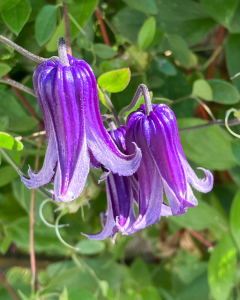
Known as the “Queen of the Vines”, clematis have long been a favorite in many gardens. The name, clematis, is from the Greek word clema which refers to a tendril or vine branch and the correct pronunciation is Klem-ah-tiss but it is often pronounced as kle-MAH-tiss. Regardless of how it is pronounced, I don’t think the plant really cares!
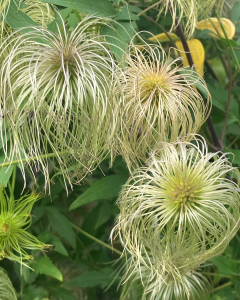
Clematis are often thought of as on old-fashioned flower, and they are. The first hybrid was introduced to gardeners in England in 1862 by an English nurseryman with the name of George Jackman. The name of his plant, Clematis ‘Jackmanii’. In that early time period, many early clematis were named for members of the nursery that was raising them. Actually, that is often still the case today and not just with clematis but many other plants as well. Now, over 150 years since its’ introduction, Clematis ‘Jackmanii’ is still a well-known and a very popular clematis.
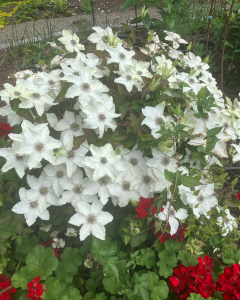
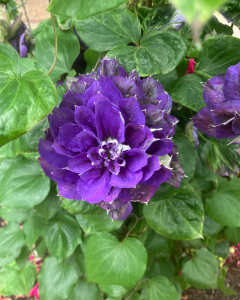
There is a huge diversity within the genus clematis, not only with regard to the color of the flowers, but the shape of the flower, the growth structure of the plant, and the time of flowering, A popular slogan regarding selecting a location for a clematis is “Head in the sun, feet in the shade”. Basically, “the head in the sun” refers to clematis as liking 5-6 hours of sun, and “the feet in the shade” refers to clematis as liking their roots in the shade with a cool damp environment. A garden mulch should be thoroughly worked into the soil at time of planting and then also using the mulch to also cover the soil. Black Gold Natural & Organic Cocoblend Potting Mix would be an excellent material to use because of the moisture retention quality of coir. Often gardeners will plant a ground cover around the roots as well.
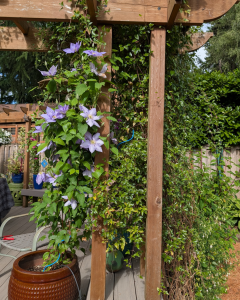
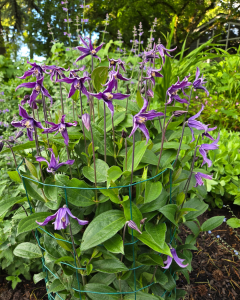
Most clematis are deciduous, and most are climbers and will need some kind of support, which could be a trellis or arbor and often gardeners will plant a clematis at the base of an established shrub. The clematis will then grow into the shrub and perhaps will bloom after a shrub has finished. However, Clematis armandii is an evergreen type and has a very vigorous growth habit. There are also some non-vining types that can be used as a ground cover. Recently there have been some newly developed hybrids that have been bred to be adapted to growing in a container.

About Mike Darcy
Mike lives and gardens in a suburb of Portland, Oregon where he has resided since 1969. He grew in up Tucson, Arizona where he worked at a small retail nursery during his high school and college years. He received his formal education at the University of Arizona where he was awarded a Bachelor of Science Degree in Horticulture, and though he values his formal education, he values his field-experience more. It is hard to beat the ‘hands on’ experience of actually gardening, visiting gardens, and sharing information with other gardeners. Mike has been involved with gardening communications throughout his adult life. In addition to garden writing, he has done television gardening shows in Portland, and for over 30 years he hosted a Saturday radio talk show in Portland. Now he writes, speaks, gardens and continues to share his love of gardening. To be connected to the gardening industry is a bonus in life for Mike. He has found gardeners to be among the friendliest and most caring, generous people. Consequently, many of his friends he has met through gardening


Camellia in January by Mike Darcy


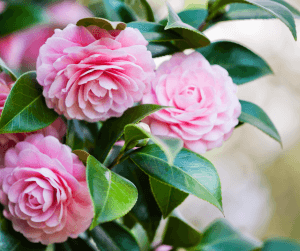
Sometimes I hear gardeners lament the lack of winter color in gardens but in the western part of the Pacific Northwest, there should be no complaints.  It is difficult to find a plant that can provide more winter color than the Camellia. While most are unscented, it is difficult to think of a winter blooming plant that can provide such diversity. With flower colors ranging from shades of red, pink, cream, and white, as well as many that are variegated and with blooms that can be single or double, the choices are vast. Plus, a big benefit to gardeners is that they are easy to grow.


Due to their diversity, it should come as no surprise that Camellias have different blooming periods depending on the particular type. With the winter season upon us, I am going to focus on Camellia sasanqua which are generally winter bloomers. A few of these Camellias will be highlighted but a visit to your local garden center will provide an idea of what is locally available.


While there are some very large Camellias in older established neighborhoods that are planted with no sun protection, I think they perform best with some shade, especially protection from the hot afternoon sun. Planting in a location with morning sun or filtered sunlight from trees is ideal. Some plants can grow into quite large shrubs so be sure to check the plant label as to height and width.


Camellias like to be planted in a soil that is moist and well-draining. Black Gold® Natural & Organic Cocoblend Potting Mix would be an ideal potting mix to work into the soil at time of planting. The coir, (coconut fiber) in this mix has excellent high water holding capacity qualities. Generally, Camellias are not deep-rooted plants and a yearly addition of a top dressing around the plant with Black Gold® Natural & Organic Garden Compost Blend would be a benefit.


There are many selections of Camellia sasanqua to choose from and I’ll mention several that I have grown or know friends that have. This season seems to have been and continues to be an extremely prolific blooming year.

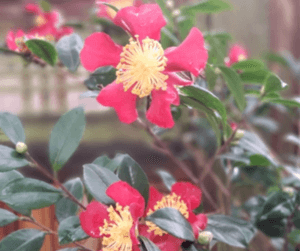
Yuletide is a Camellia sasanqua, so named because it is usually at bloom during the Christmas season with red single flowers. It is one of the most popular of the winter blooming camellias. Yuletide’ also makes an excellent container plant and having one at an entryway can brighten a gloomy winter day. To add even more color, try planting white pansies around the base.

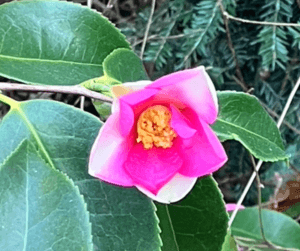
Showing off the diversity in flowers, a popular Camellia sasanqua that is multi-colored is ‘Yume’. This has single pink and white petaled flowers, each petal is either pink or white. It has a long winter flowering season with blooms appearing in November and continuing until March.

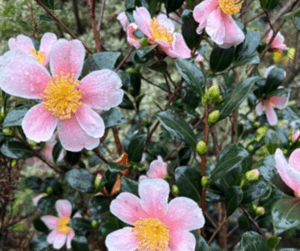
Another popular one and with a name that makes me smile is Camellia sasanqua ‘Pink-A-Boo’. This camellia, unlike most, has fragrant flowers. The pink flowers have bright yellow stamens and typical glossy, dark green foliage. A friend has had this growing in his garden for about ten years and it is about five feet in height and provides a nice ‘pop’ of winter color amongst other evergreen shrubs.


About Mike Darcy


Mike lives and gardens in a suburb of Portland, Oregon where he has resided since 1969. He grew in up Tucson, Arizona where he worked at a small retail nursery during his high school and college years. He received his formal education at the University of Arizona where he was awarded a Bachelor of Science Degree in Horticulture, and though he values his formal education, he values his field-experience more. It is hard to beat the ‘hands on’ experience of actually gardening, visiting gardens, and sharing information with other gardeners. Mike has been involved with gardening communications throughout his adult life. In addition to garden writing, he has done television gardening shows in Portland, and for over 30 years he hosted a Saturday radio talk show in Portland. Now he writes, speaks, gardens and continues to share his love of gardening. To be connected to the gardening industry is a bonus in life for Mike. He has found gardeners to be among the friendliest and most caring, generous people. Consequently, many of his friends he has met through gardening