
Articles

Cannas for Color All Summer by Mike Darcy

Big, bold, bodacious & beautiful, cannas are a superb plant for providing color all summer. Not only will cannas produce flowers but some of their spectacular foliage can make them a colorful plant in the garden even when not in bloom. Cannas are well adapted to growing in a garden bed or in a container. Planted in the ground, cannas can make a very striking mass of color with their large leaves and flowers.  They also make excellent container plants and are ideal for a small space garden or on a deck or patio. 

Cannas have a starch rich rhizome and have been cultivated for hundreds of years. Most of the species available today are from the American tropics and subtropics and in their initial introduction to gardens, they were considered tropical plants. While it is true that they are tropical, they are what I would call a ‘hardy’ tropical that can be successfully grown as a summer plant in most temperate zones in the United States and can be an easy and low maintenance plant.
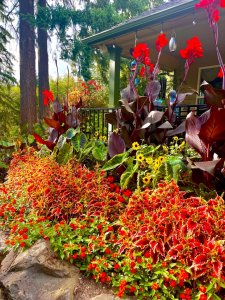
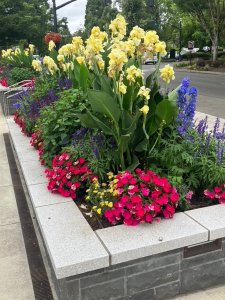
In my own garden, in western Oregon, I like to grow them in containers on our deck. Our deck is in full sun and they thrive and bloom all summer. My soil choice has been either Black Gold Moisture Supreme Container Mix or Black Gold Natural & Organic Potting Mix. For growing cannas in a container, a large pot is best, it is amazing how much a plant can spread in just one season.


There are lots of choices with the diversity of cannas regarding flower color, foliage pattern, and the height of the plant. The tall growing types are idea for the back of a mixed flower bed which when selecting a plant, it is important to consider the space and the desired height.
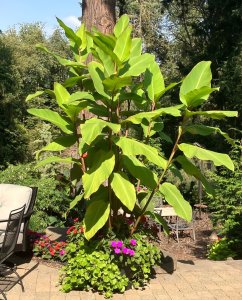
For a fun and novelty canna that probably grows much too tall for most container planting is Canna musifolia, often called the Banana Canna. This is a tall grower and has the common name of Banana Canna for a reason, it grows fast and tall, often 8 feet or more!

As I mentioned, the canna choices are vast and below are couple of my favorites that are growing in my garden this summer. When visiting a garden center, there will be many more than what I mention here.
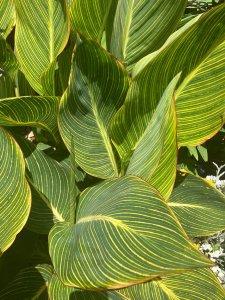
 

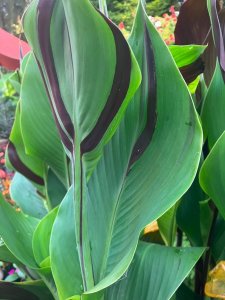
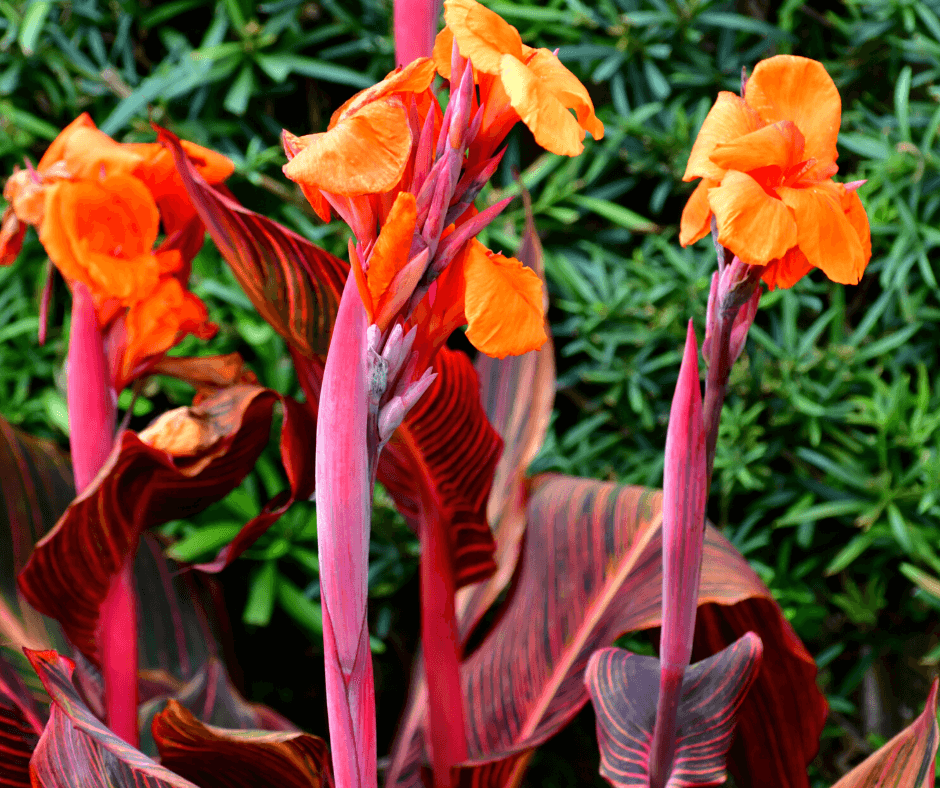
Canna pretoria ‘Bengal Tiger’ is known for the very attractive striped foliage. While this canna has vivid orange flowers, even when not in bloom, the foliage makes this a very colorful and attractive plant. It is a great choice for a pot on a deck or patio.


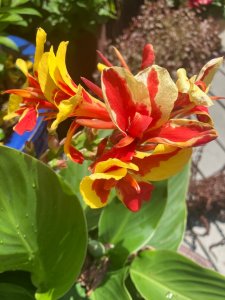
If I was picking a favorite, it would have to be canna ‘Cleopatra’. This canna has both multicolored leaves and flowers. Some leaves will be all green, some will be a dark bronze, and often a leaf will be a mix of the two colors while some will be green with a single stripe of bronze. The flowers are equally diverse in color. They can be all red, all yellow, (sometimes with spots), and a flower can be half red and half yellow. It makes a great conversation plant!
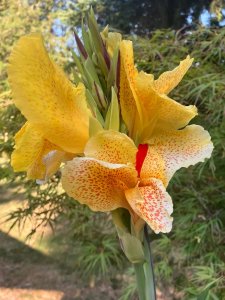
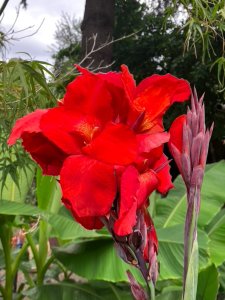
Red Gold Flame was new to me last year and is a lower growing type which makes it idea for a small space. It was never without a flower.
As mentioned earlier, cannas are a tropical plant and may need some winter protection depending on the region they are growing in. In western Oregon, when planted in the ground and with good drainage and a mulch covering, they will often survive a winter. Being in a container, they are more vulnerable to the elements, and it is a good idea to give them winter protection. Once cold weather arrives, I cut the stems back to the soil level and lift plant out of the container and shake off excess soil. Not having a greenhouse or basement, I put the rhizomes in a large plastic container and cover them with peat moss and then store the container in our unheated garage. This has worked for me for many years and in the spring, they are ready to plant.

Most garden centers will have a good selection at this time and the plants will probably be in bloom. If you have never grown cannas, give them a try and I think you will be pleasantly surprised at the color they will provide for the balance of the summer.

 

About Mike Darcy


Mike lives and gardens in a suburb of Portland, Oregon where he has resided since 1969. He grew in up Tucson, Arizona where he worked at a small retail nursery during his high school and college years. He received his formal education at the University of Arizona where he was awarded a Bachelor of Science Degree in Horticulture, and though he values his formal education, he values his field-experience more. It is hard to beat the ‘hands on’ experience of actually gardening, visiting gardens, and sharing information with other gardeners. Mike has been involved with gardening communications throughout his adult life. In addition to garden writing, he has done television gardening shows in Portland, and for over 30 years he hosted a Saturday radio talk show in Portland. Now he writes, speaks, gardens and continues to share his love of gardening. To be connected to the gardening industry is a bonus in life for Mike. He has found gardeners to be among the friendliest and most caring, generous people. Consequently, many of his friends he has met through gardening

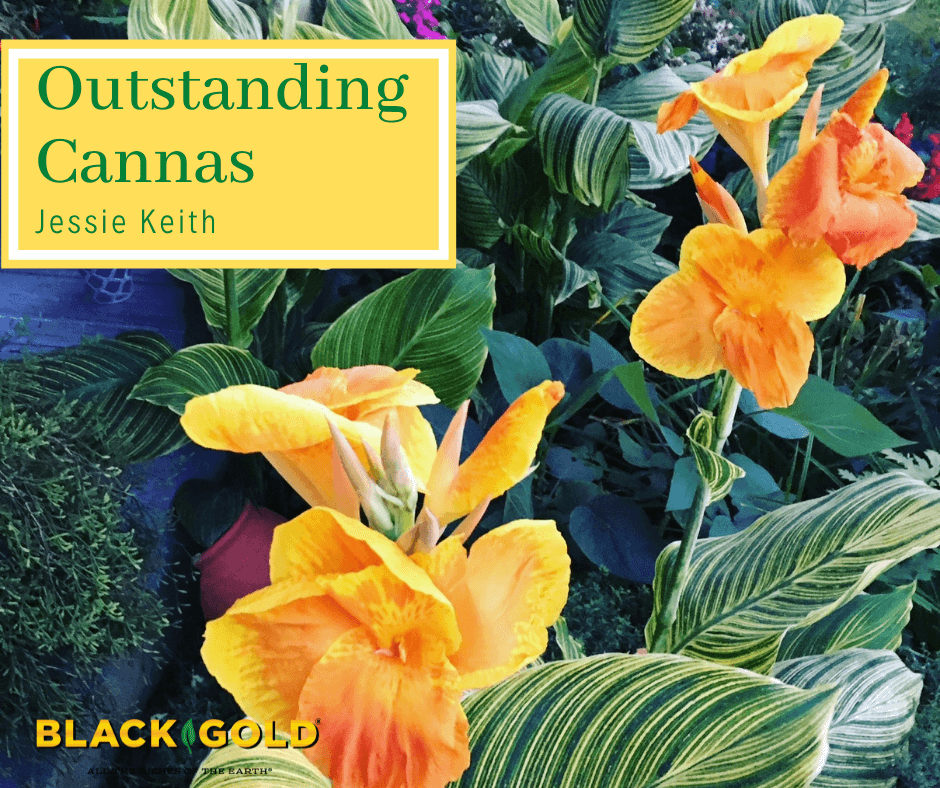
Outstanding Cannas

Every summer I plant my favorite Canna standby, ‘Striata’. It is the perfect floral backdrop for other bright garden flowers. (Image by Jessie Keith)

Cannas are summer-garden workhorses. They grow lushly in the hottest months, only requiring regular water, partial sun, and maybe a hit of slow-release fertilizer at the beginning of the season. Their leaves are bold and lovely, their tropical flowers come in lots of warm pretty colors, and hummingbirds are prized pollinators. The plants also spread and are easily divided and shared. My garden will never be without one.

Canna Origins

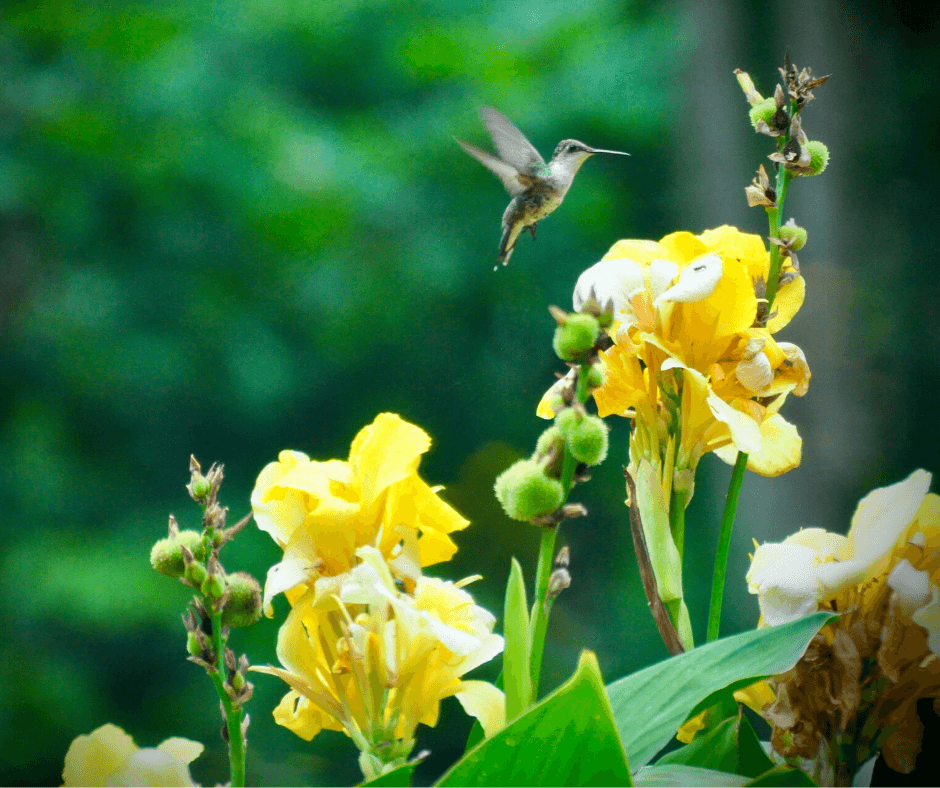
Hummingbirds love visiting all canna blooms!

Cannas (Canna hybrids, Zones 8-11) are subtropical to tropical and American. There are 12-21 accepted species, depending on who you reference. These are found in Mexico, Central America, the Caribbean, and tropical South America. The common garden type is Canna × generalis, a hybrid of several species. They were cultivated by native Americans, presumably for both their attractive flowers and fleshy, edible roots. In the late 1900s, cannas were popularized in European and then North American gardens. Since this time, many attractive hybrids have been developed, with new varieties appearing now and then.

Ten Favorite Cannas

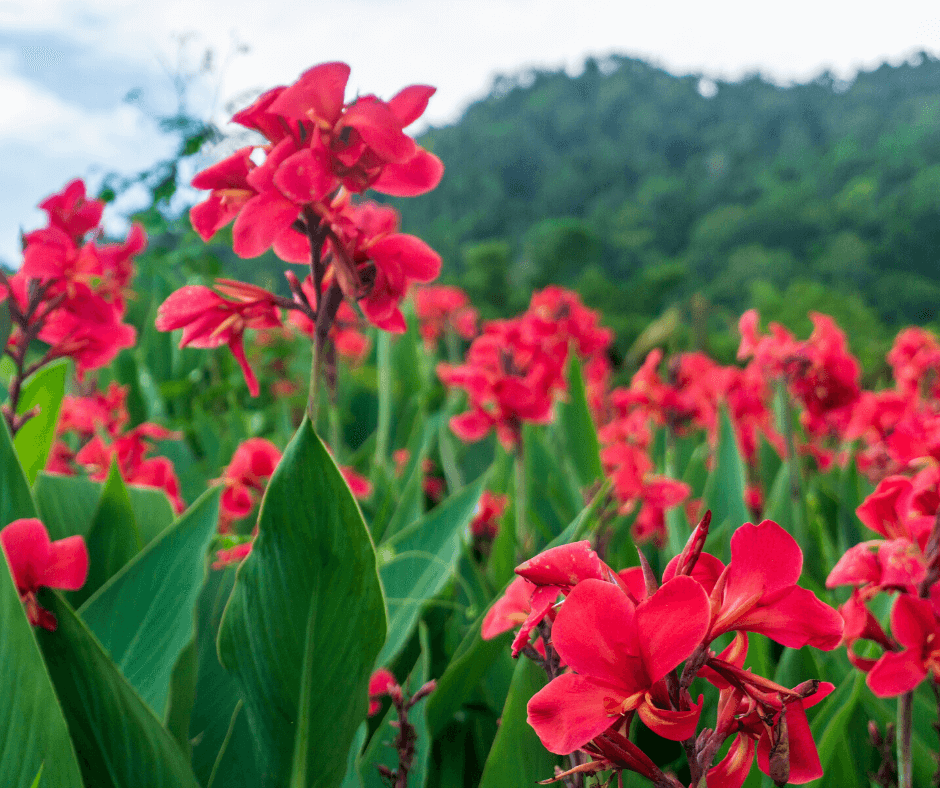
Red-flowered cannas, like ‘Kreta’, are sure to attract hummingbirds.

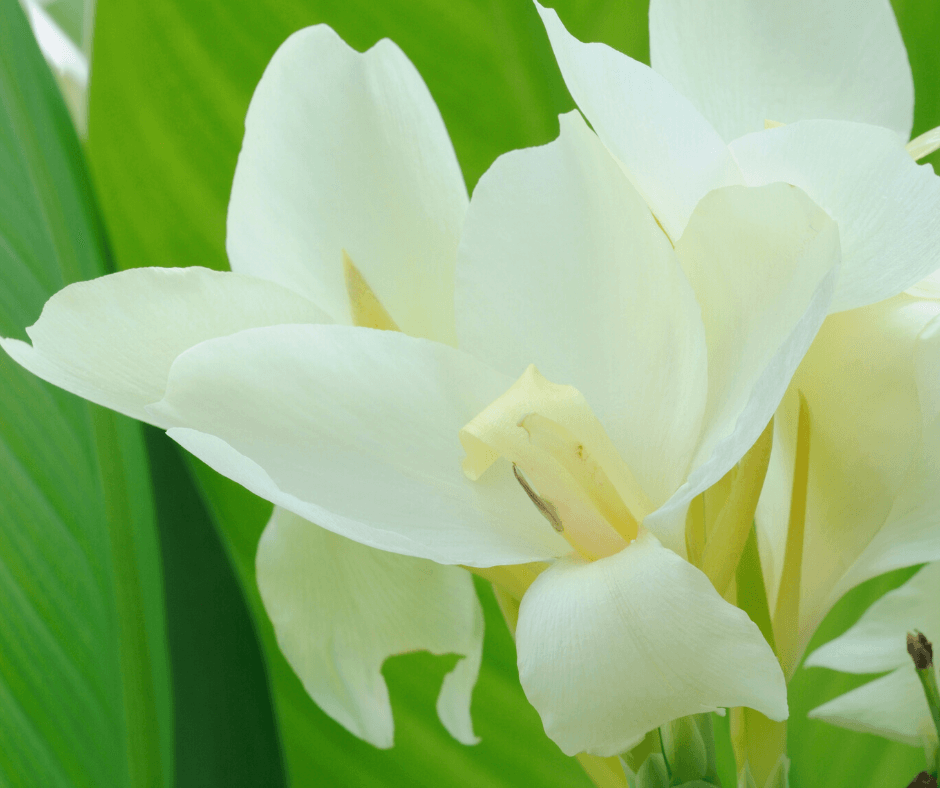
Alaska‘ (3-4 feet): Large cream-colored blooms are the great beauty of this compact canna, and its blue-green foliage is also respectably pretty. It gets all-around rave reviews.

Australia‘(4-5 feet): Large red flowers and big bronzy-purple leaves make this impressive canna a standout. If you are looking to fill a large space with lots of reliable color, this is your canna. It contrasts well with orange- and yellow-flowered plants.

‘Alaska’ is a compact, cream-colored canna.

Cleopatra‘ (4-5 feet): Expect explosive fireworks of color with ‘Cleopatra’. Its impressive green leaves have irregular blocks of dark purple. These are in stark contrast to its flowers, which are half red and half yellow with red spots. Expect it to receive many compliments.

Kreta‘ (3-4 feet): Here is a great canna for nonstop flowers. Its numerous red blooms are prolific and attract lots of hummingbirds and rise above large green leaves.

Musifolia‘ (6-8 feet): This old canna variety is grown for its tall stature and impressive large leaves with hints of red and purple. In the height of summer, it will also offer spikes of small red flowers.

Phasion‘ (syn. ‘Durban’ and ‘Tropicanna’, 3-4 feet): Most regard this as the most electrifying of all cannas. Few garden plants can challenge its impressive tropical palette of colors. Its striped leaves alone are a masterpiece, and its brilliant tangerine-orange flowers add the winning touch.

Striata‘ (syn. ‘Praetoria’, ‘Bengal Tiger’, and ‘Aureostriata’, 5-6 feet): My garden is never without a ‘Striata’ for summer color. Its pale-yellow striped leaves provide a more neutral backdrop for the light orange flowers it produces from midsummer to frost in my area.

Toucan® Coral is a beautiful compact canna from Proven Winners®. (Image thanks to Proven Winners®)

Tenerife‘ (3-4 feet ): Big golden flowers speckled with deep orange-red make this an extra lovely compact canna. Its leaves are medium green.

Wyoming‘ (3-4 feet): I always confuse ‘Wyoming’ and ‘Australia’ because they are comparable in every way except flower color. This one has beautiful orange flowers to offset its purplish-bronze foliage.

Toucan® Series (Scarlet, Yellow, Dark Orange, Coral, 2.5-4 feet): Toucan cannas are big bloomers on short-statured plants. They come highly recommended for containers. Expect them to perform beautifully all summer long.

Canna Care

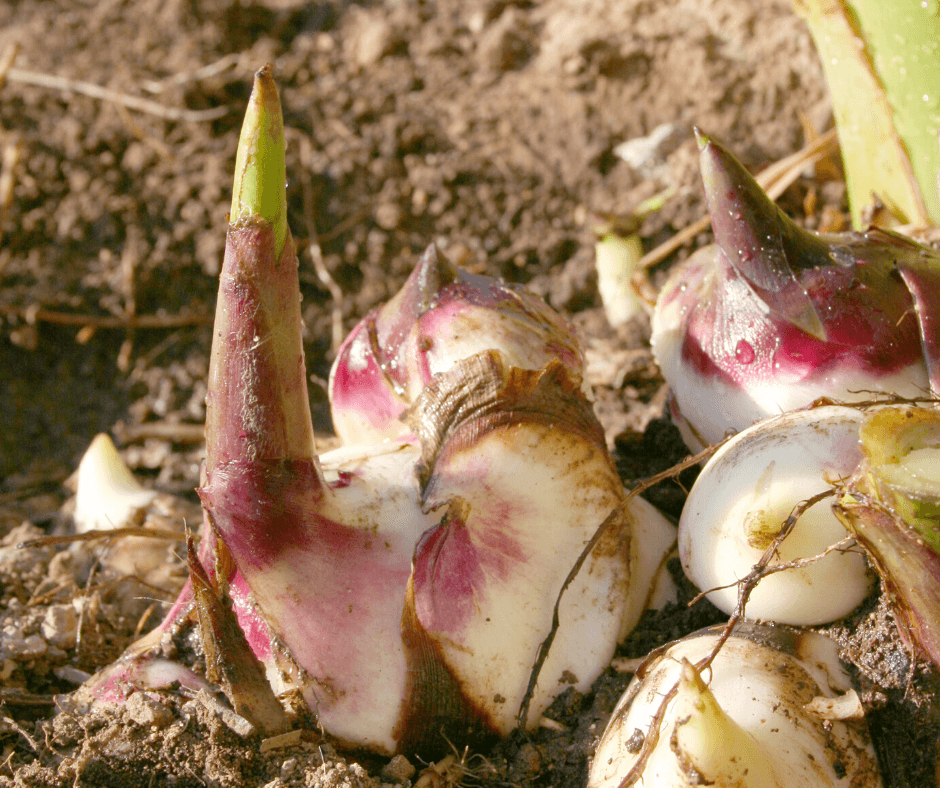
Canna rhizomes are easy to plant, dig, and divide.

Cannas are lush, tropical to subtropical perennials that grow best in the full to partial sun. They thrive in rich moist to average soils–the addition of organic matter at planting time is recommended. Black Gold Garden Soil is a great choice. Provide a boost of continuous-release fertilizer formulated to encourage good growth and flowering. They originate in warm, humid, rainy areas and appreciate regular water. Many even grow well along pond margins or boggy spots. When conditions are warm, they will flower. If they are not hardy where you live, dig their dense, fleshy rhizomes in the fall and store them in a cool, dark place through winter. Plant them again outdoors when the soil has warmed and frosts are gone.

Canna Yellow Streak Virus

Several viral diseases will put a damper on canna growth and flowering. The two most common are the canna yellow streak virus (CaYSV) and the canna yellow mottle virus (CaYMV). Infected plants show abnormal leaves with browning or yellowing streaks or mottled patterns. If your canna leaves exhibit these, dig and dispose of them immediately. When replacing them, buy only certified virus-free stock (specialty growers are usually the most reliable source). Be sure not to reuse the potting soil, if your diseased plants were in containers.

Why Didn’t My Cannas Bloom?

“This year, I didn’t get many blooms on my cannas. Any ideas?” Question from Gloria of Morgan Hill, California

Answer: I’m sorry to hear that your cannas did not bloom well. Let me cover everything that they need to grow and flower to their fullest, followed up by some danger areas, and you can troubleshoot from there.

What Cannas Need to Grow Well

Cannas (Canna species and hybrids, Zones 8-11) are lush, tropical to subtropical perennials adapted to full to partial sun, and rich moist to average soils. Providing a boost of continuous-release fertilizer formulated for flowers always encourages good blooming. They originate from warm regions of the Americas where climates are humid and rainy. When growing conditions are ideal, they will flower with no trouble. If they are not hardy where you live, dig their rhizomes in fall and store them in a cool, dark place through winter.

Conditions that Discourage Canna Flowering

Here are several suboptimal growing conditions that will discourage blooming cannas: too little water, too little light, low humidity, and too little fertilizer.

There are also several viral diseases that will discourage growth and flowering in cannas. These include the Canna yellow streak virus (CaYSV) and Canna yellow mottle virus (CaYMV), among others. Plants with these diseases show abnormal leaves with browning or yellowing streaks of mottled patterns. If your canna leaves exhibit either, dispose of the plants immediately and replace them with certified virus-free stock (specialty growers are usually the most reliable source). Be sure not to reuse the potting soil, if your plants are in containers.

I hope that this helps!

Jessie Keith

Black Gold Horticulturist

Can you do the Cannas Can?

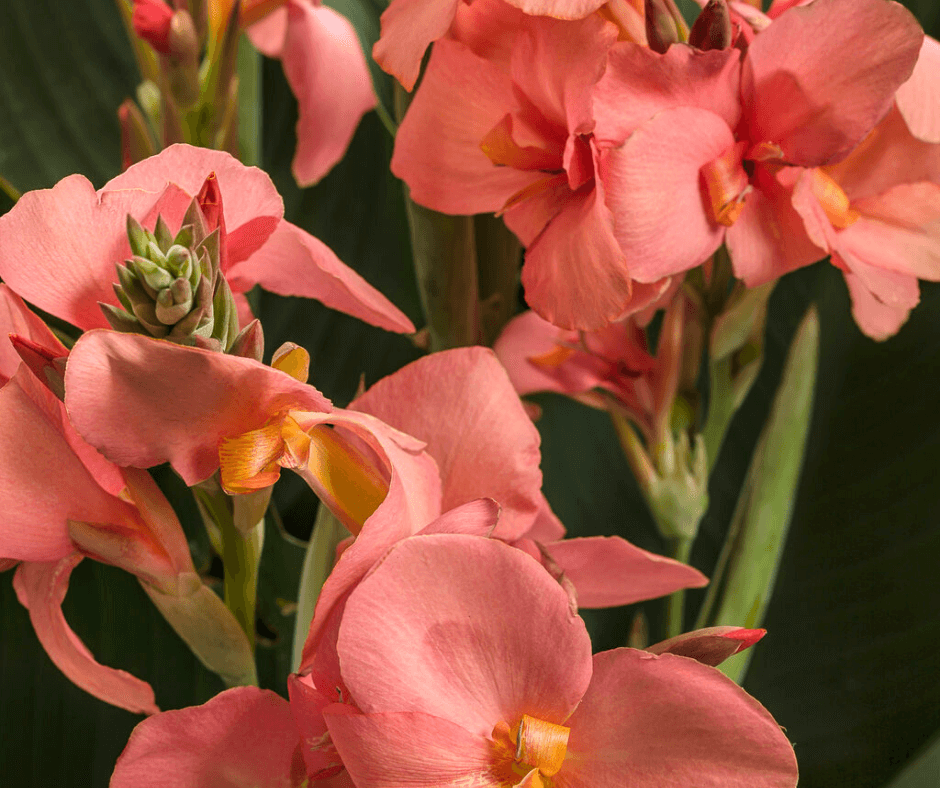
The show stopping beauty of cannas is best enjoyed this time of year when many other ornamentals are flagging. Their bold, tropical foliage lights up the garden even when not in flower and showy blooms are icing on the cake. Keeping these heat-lovers happy is easy. The key is ensuring their roots are moist to wet, they have enough light, and they are well-fertilized. These steps will keep plants healthy and flowers dancing through to fall. Some canna favorites with bold leaves and flowers include the multi-colored ‘Phasion’ (Tropicanna™), and the compact ‘Striped Beauty’ with its striped foliage and bold flowers that are red in bud and open to brilliant lemon yellow. When it comes to showy flowers, nothing beats the perfect salmon pink blooms of Canna ‘Mrs P.S. Dupont’. Ooh la la!

Gardener’s Note: Several viral diseases have plagued cannas in recent years. If your well cared for cannas have yellow streaked, mottled or browning leaves or leaf veins, they are likely infected and should be dug up and disposed of away from the garden.

Canna 'Mrs P.S. Dupont' Detail - Jessie Keith

Canna ‘Mrs P.S. Dupont’ Detail

Canna 'Mrs P.S. Dupont' - Jessie Keith

Canna ‘Mrs P.S. Dupont’